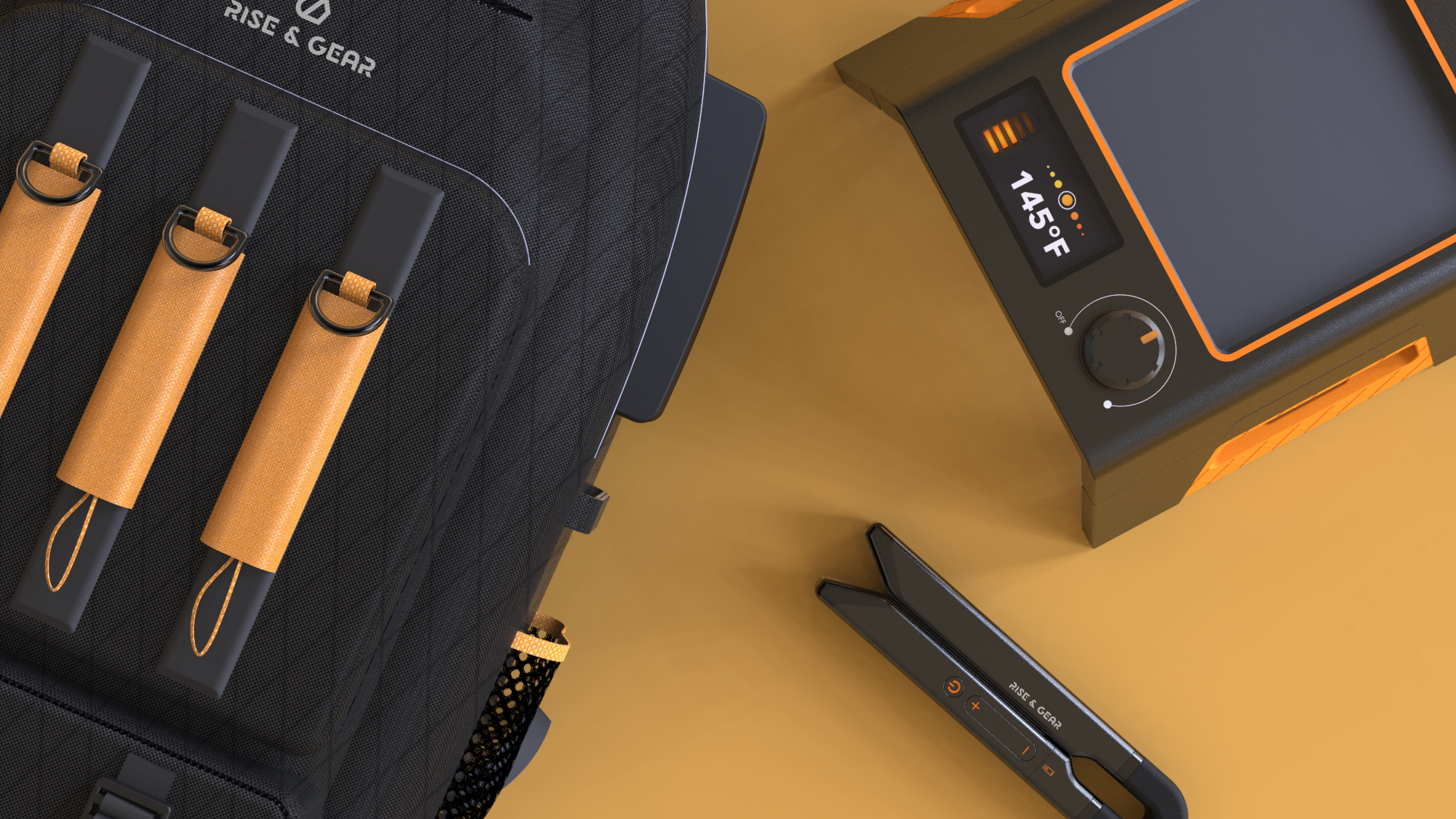
This project explores the designing of family of products in the outdoor camping field for a brand I created called Rise & Gear that focuses on urban minimalistic aesthetics targeting outdoor campers and fishing hobbyists. For its family of products, I designed a backpacking stove, a backpack, and a flashlight.
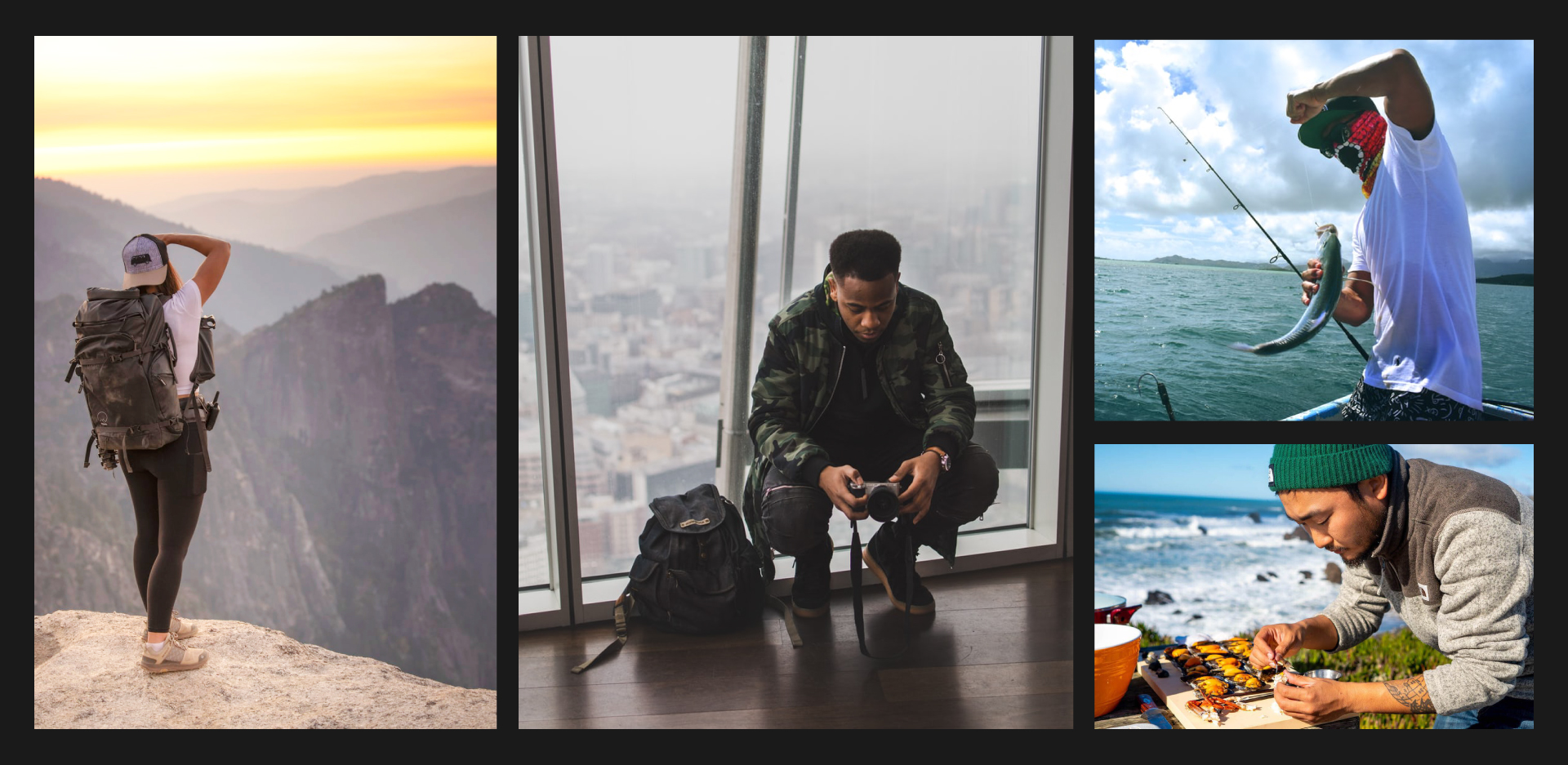
Rise & Gear is an outdoor equipment brand that targets trendy camping and fishing hobbyists living in the metropolitan or suburban areas. They are inspired by the streets and urban culture, and strive to bring comfort and innovation to their users who wants a better way to enjoy their time.
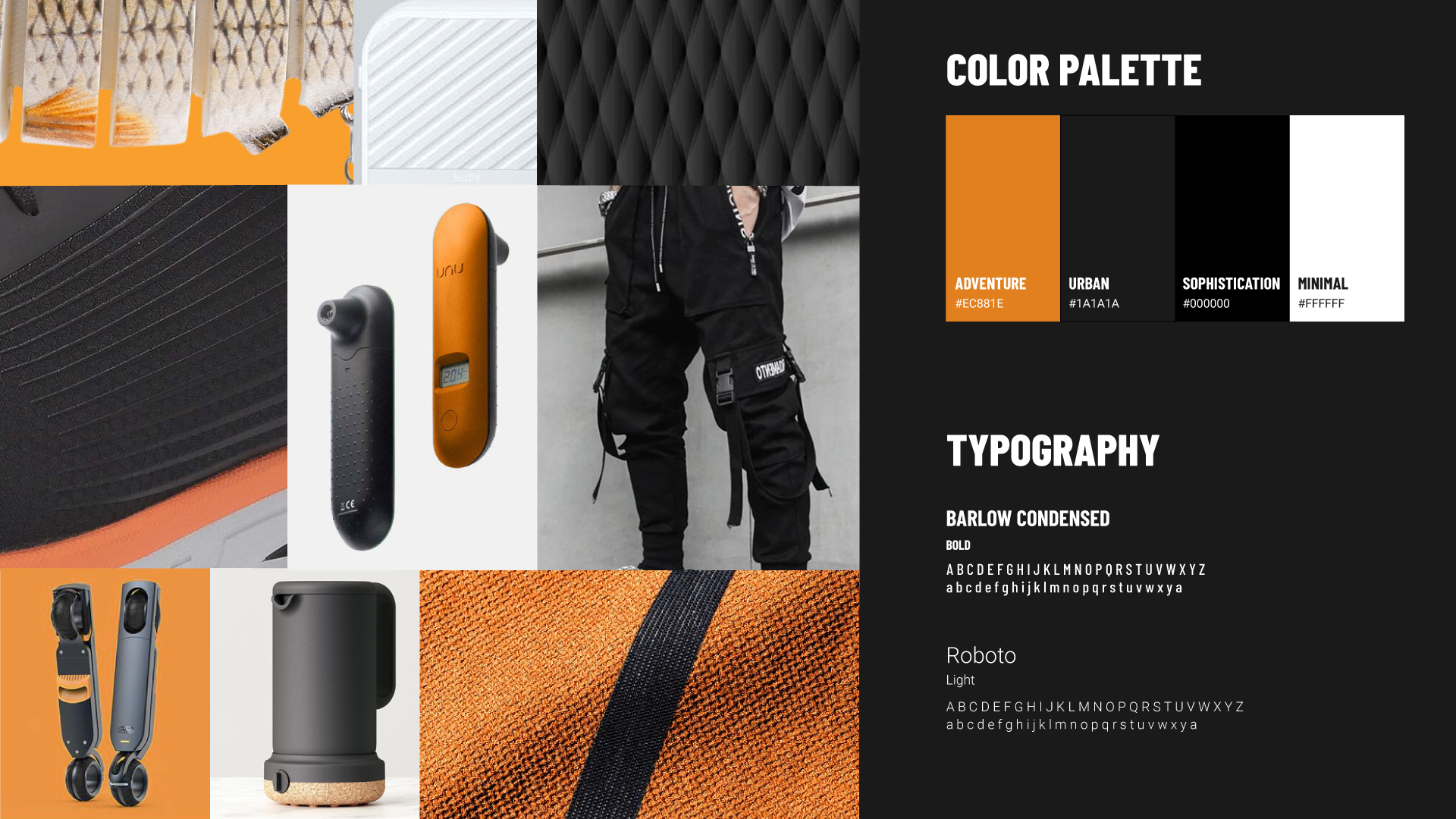
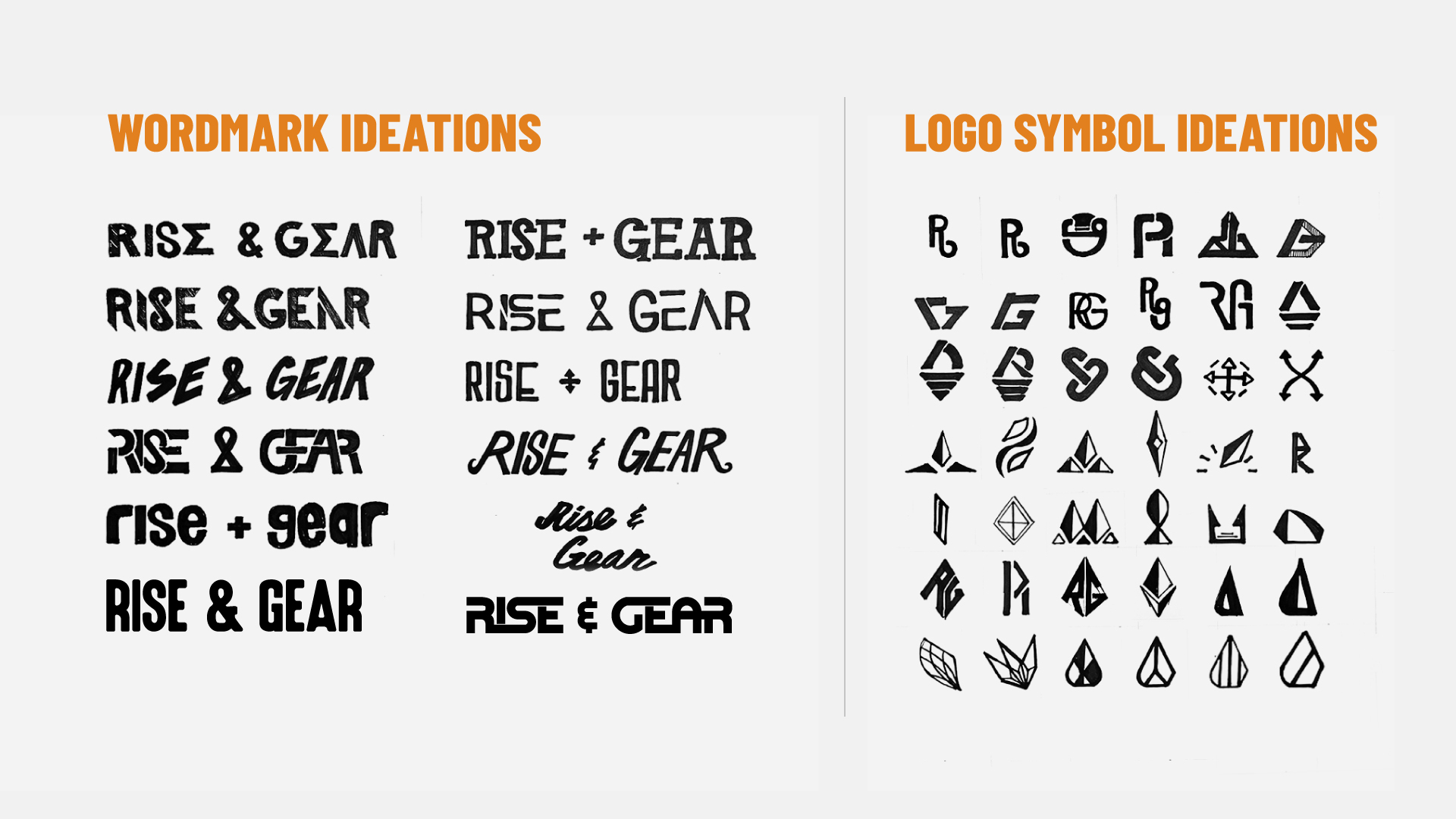
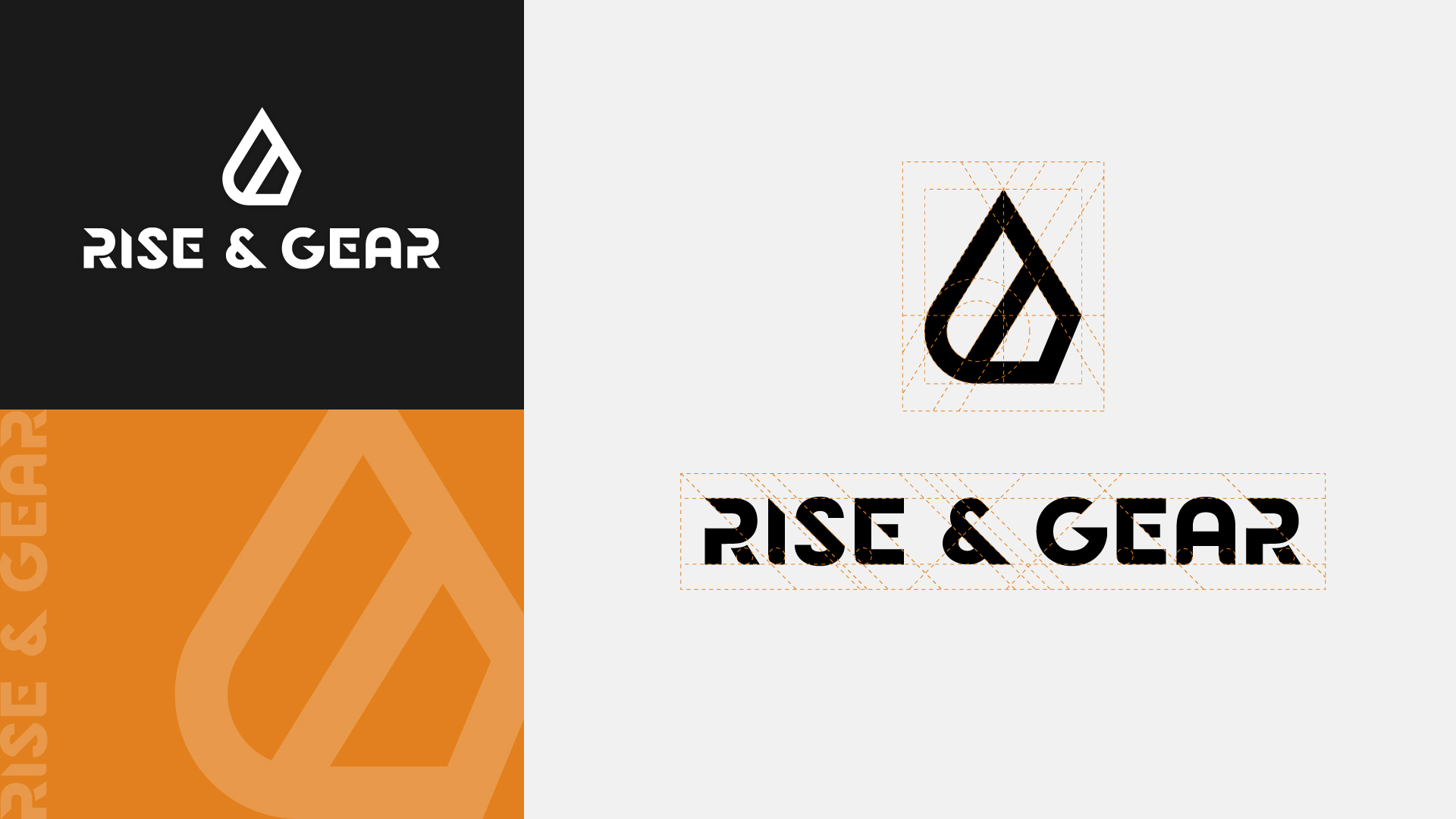
Inspired by fish scales and streetwear, I designed a modern logo that consists of angular shapes pointing upwards which represents "rise." I wanted the logo to feel urban and bold, tying it back to its streetwear culture inspiration. Its primary color is orange, symbolizing adventure while black and white stands for sophistication and minimalism.
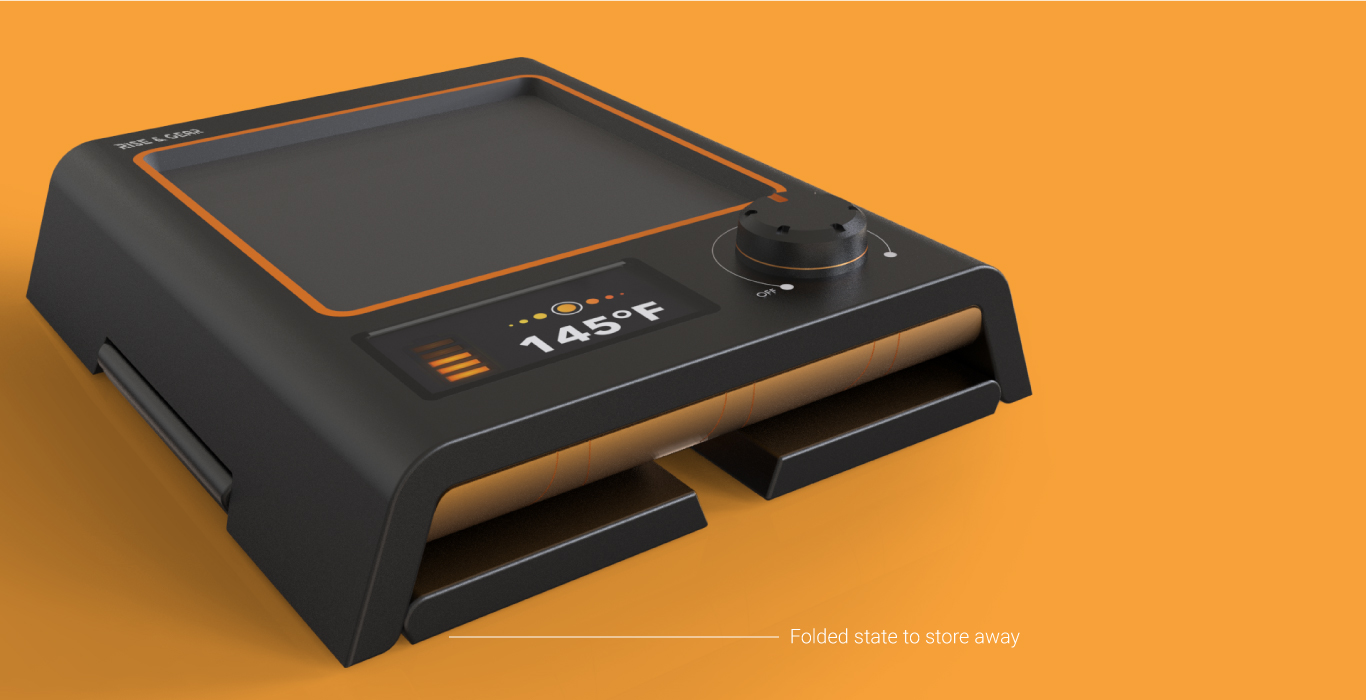
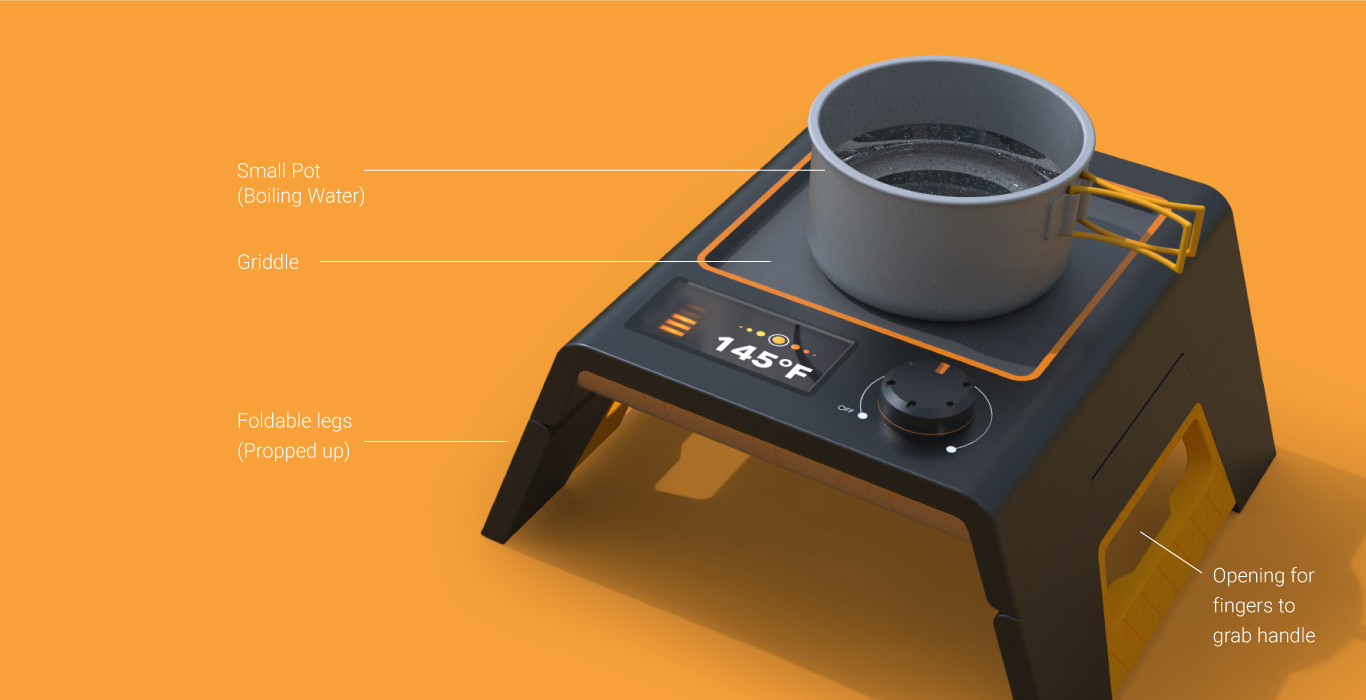
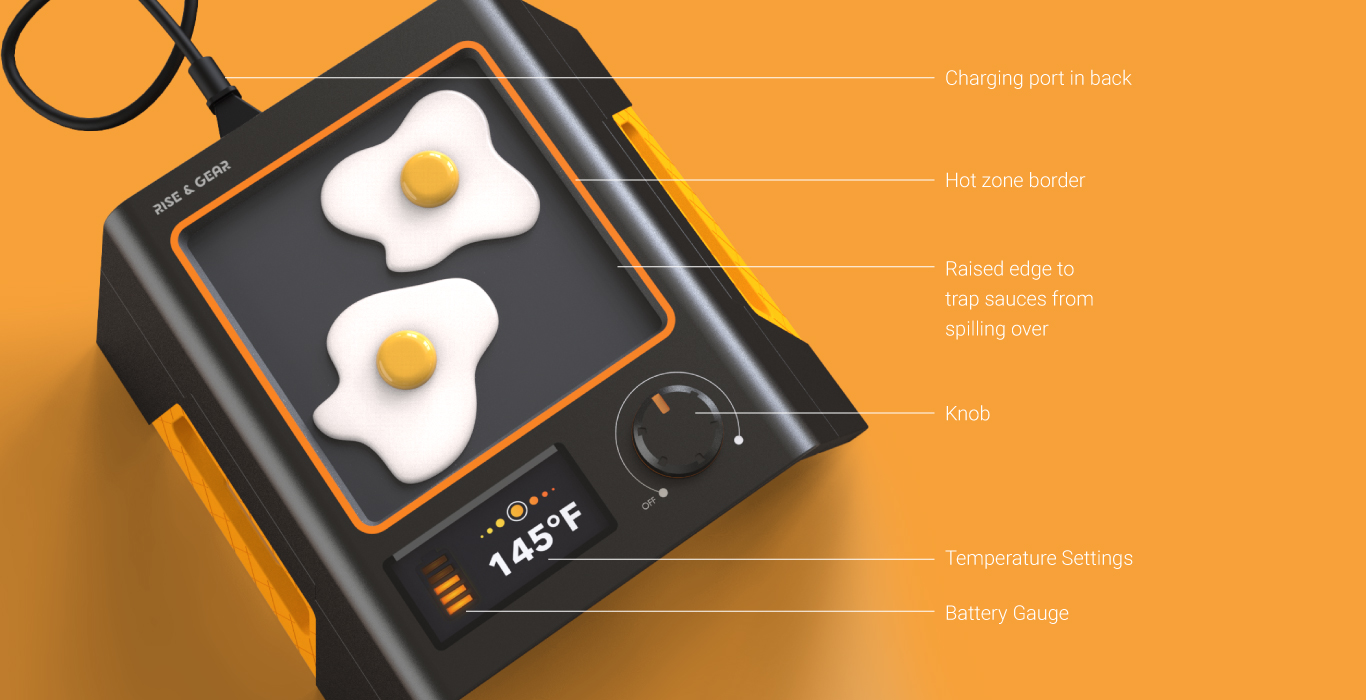
Tempa is a compact electric backpacking stove designed to be intuitive for every user to cook meals and bring it along for backpacking trips.
Most campers buy the small burners with gas canisters because it's convenient and compact. However, these burners tend to have sharp edges that tear through bags and other belongings. They're also not recyclable so users need to buy new gas canisters every time one runs out.
My goal is to create a sustainable and compact backpacking stove for users to easily and safely cook their meals outdoors.
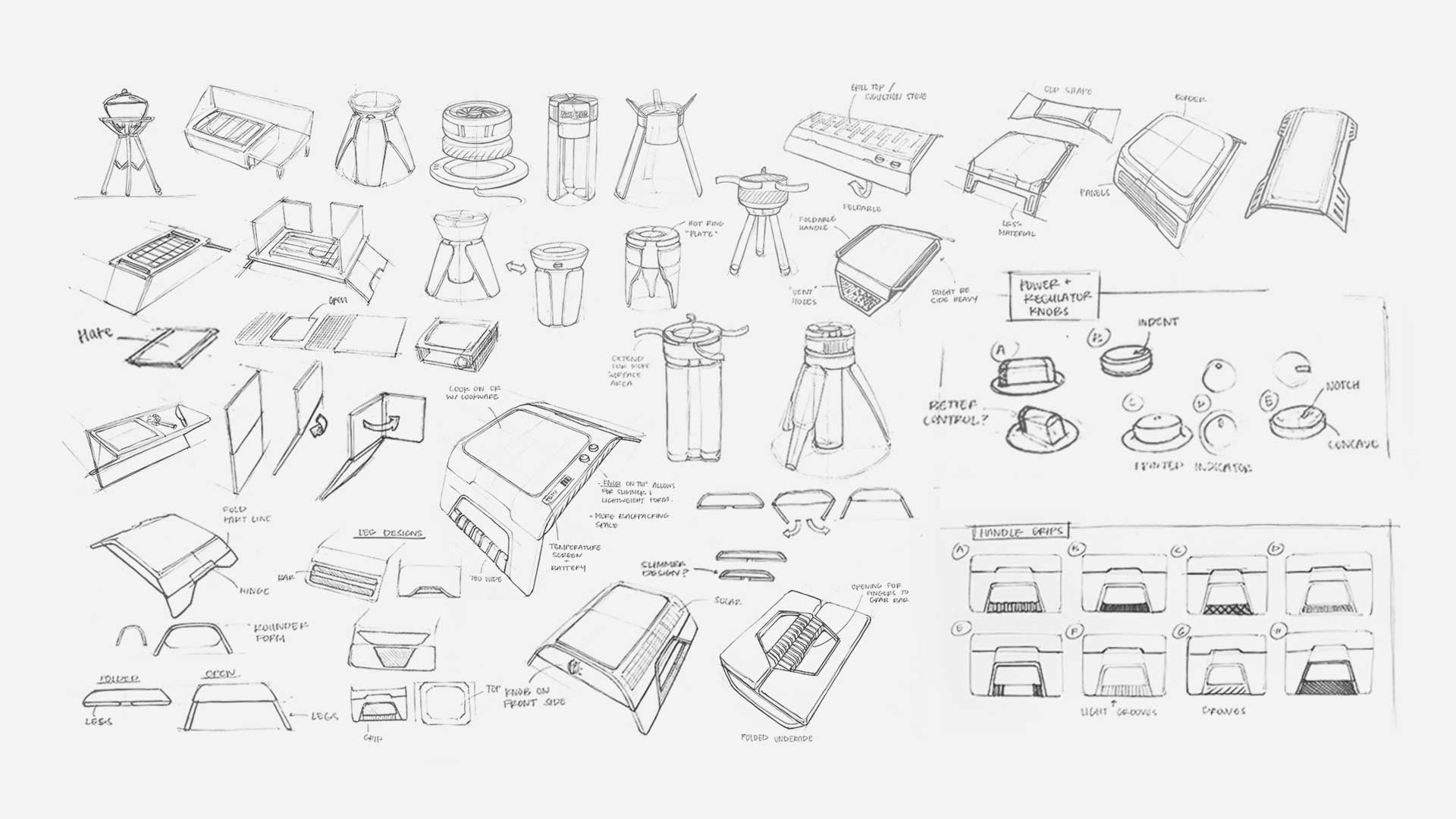
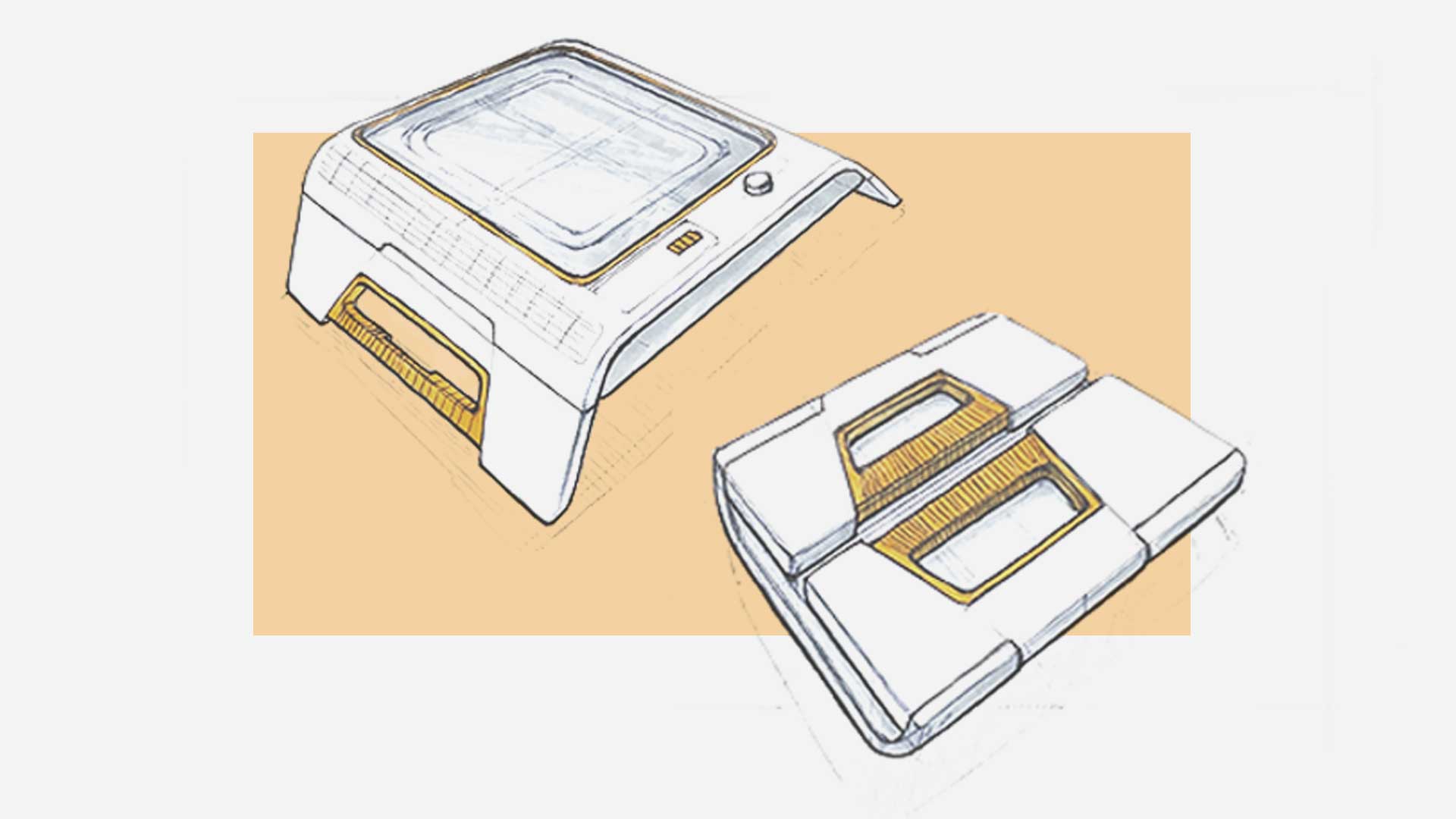
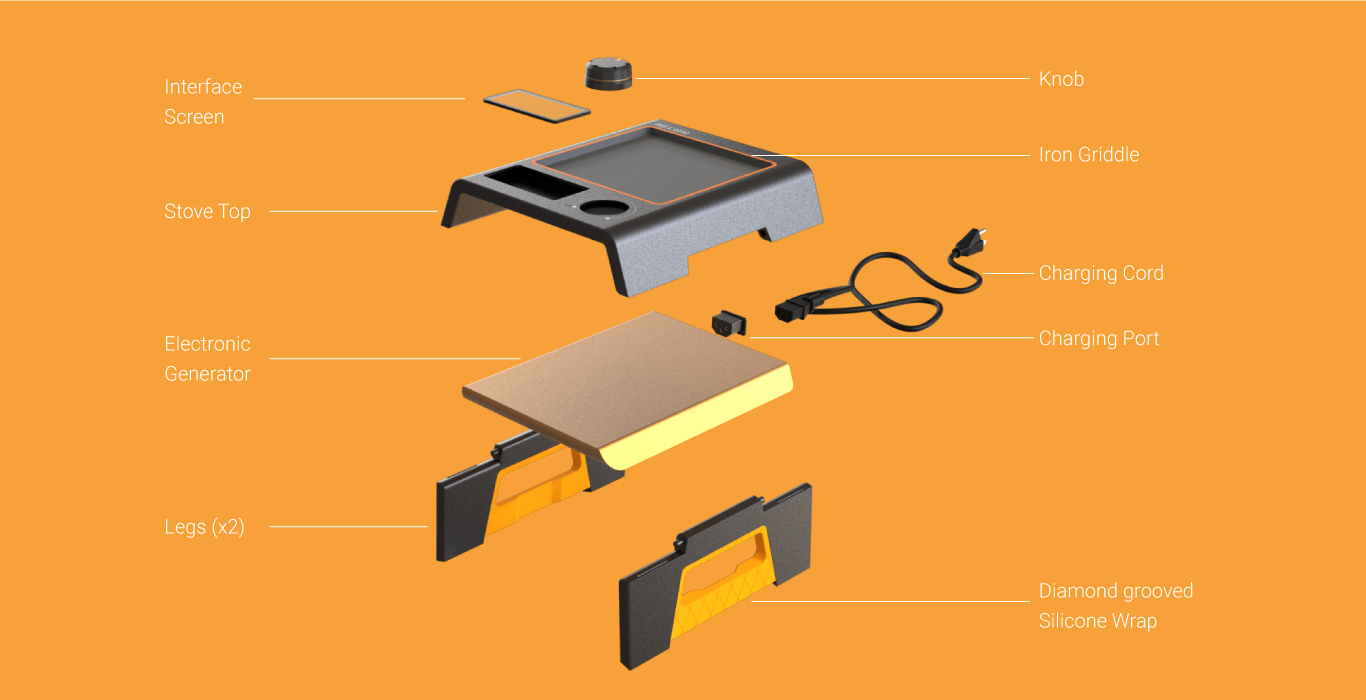
Exploring different ideas from gas stove to burner designs, I ended up going for a compact electrical stove design. I started playing with ways the stove can fold, like a flat-pack, so that users can store it in their backpacks. For sustainability, I decided to go for a charging port system where users can simply plug and charge via an outlet or an external battery. Overall, the idea is meant to be easy to use and clean, and is versatile enough for the user to cook directly on the griddle or with a pot on top.
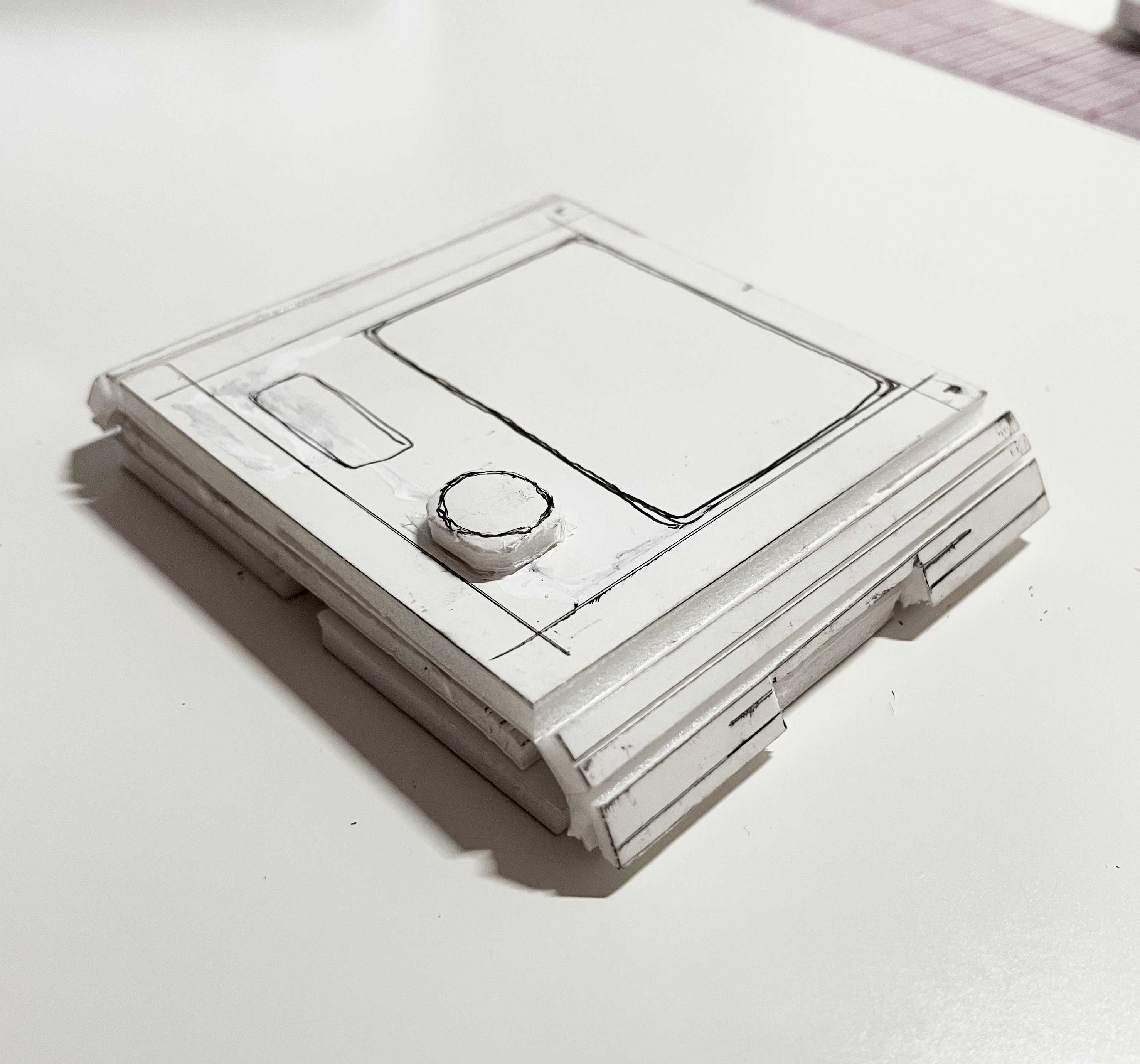
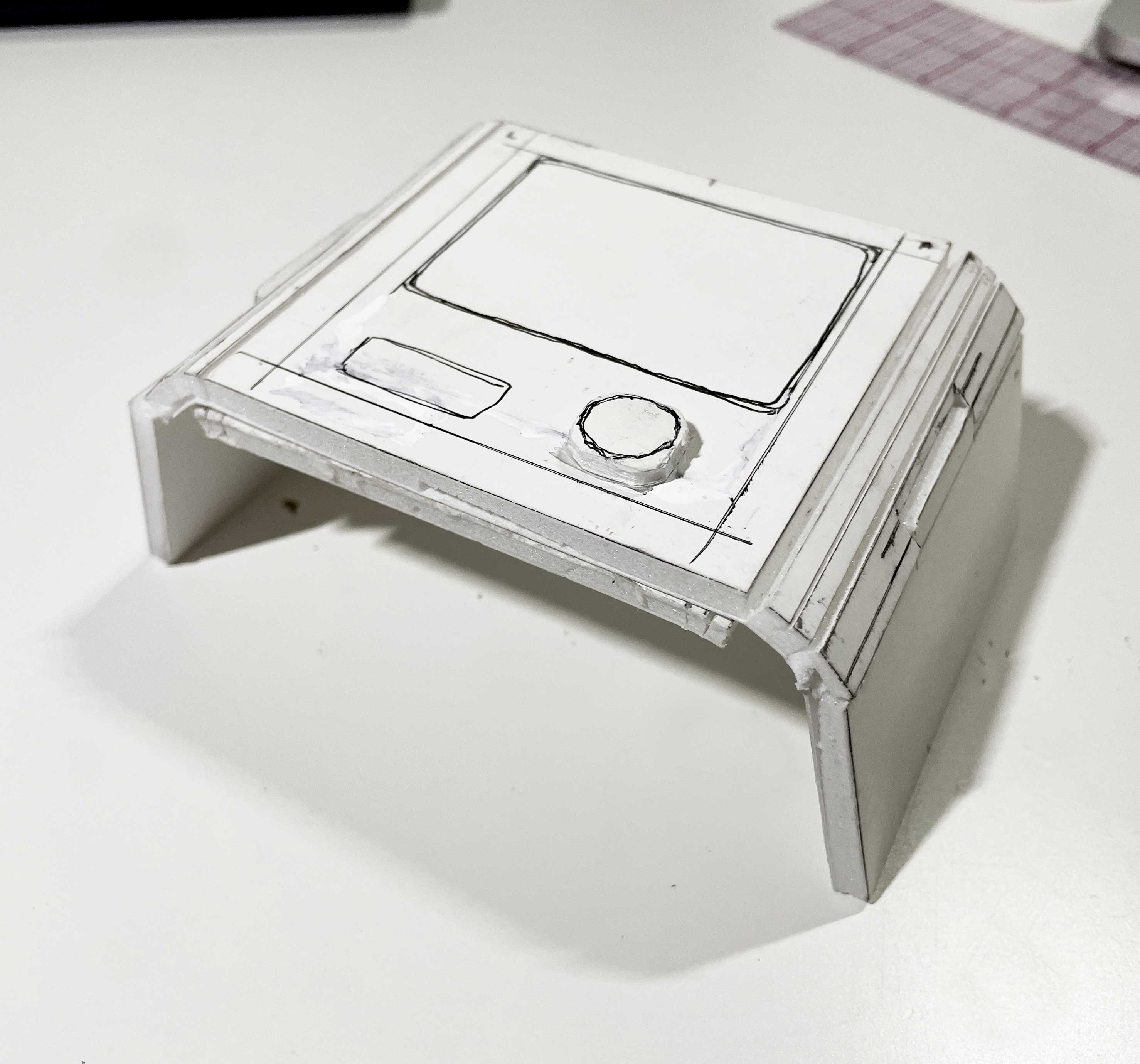
2. Propping up the legs and noticed it was unstable. It needed a locking mechanism.
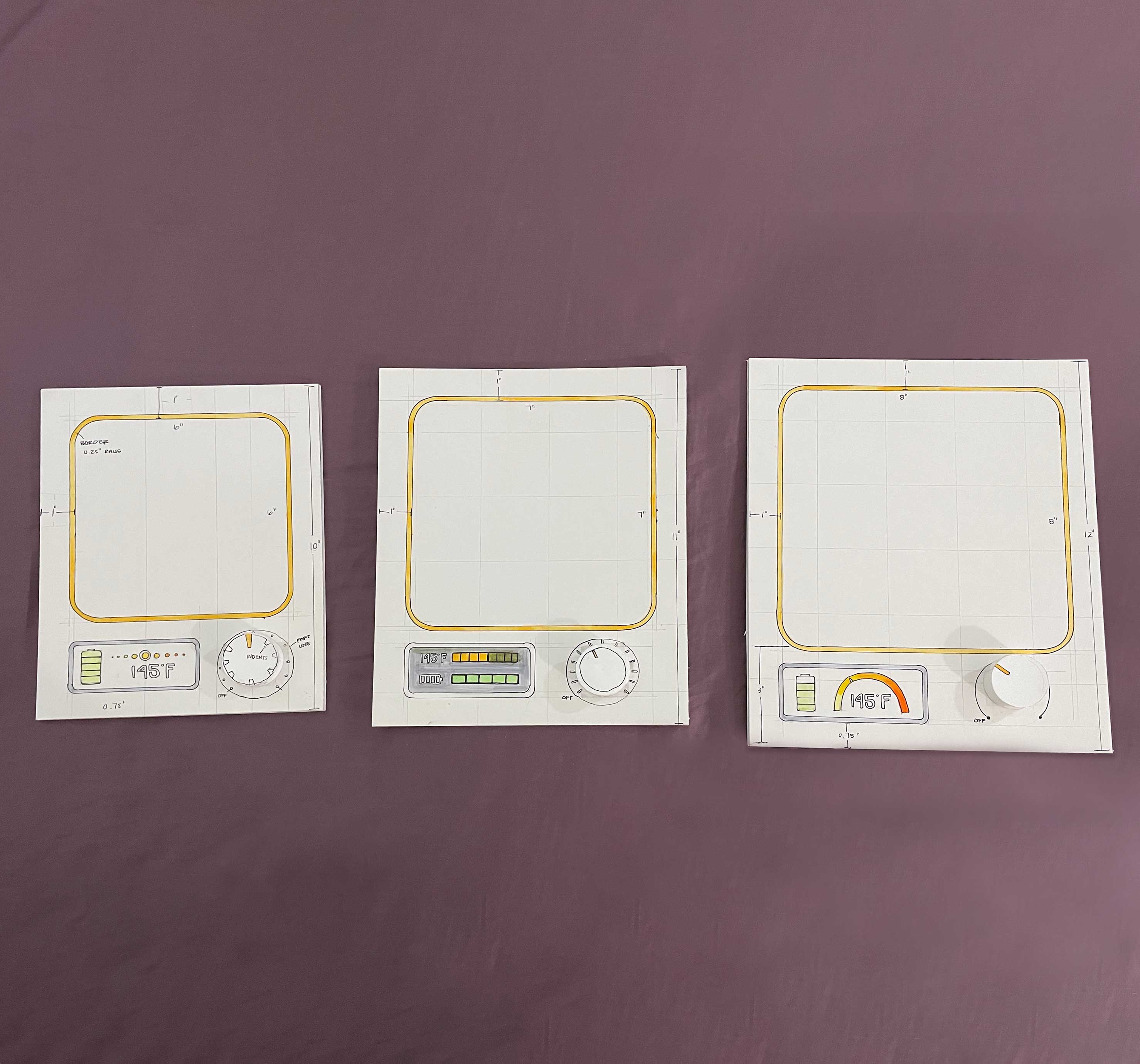
3. Measuring interface in 3 different sizes to find the best “compact” size for storing into backpack. Also, created different UI and knob designs for each.
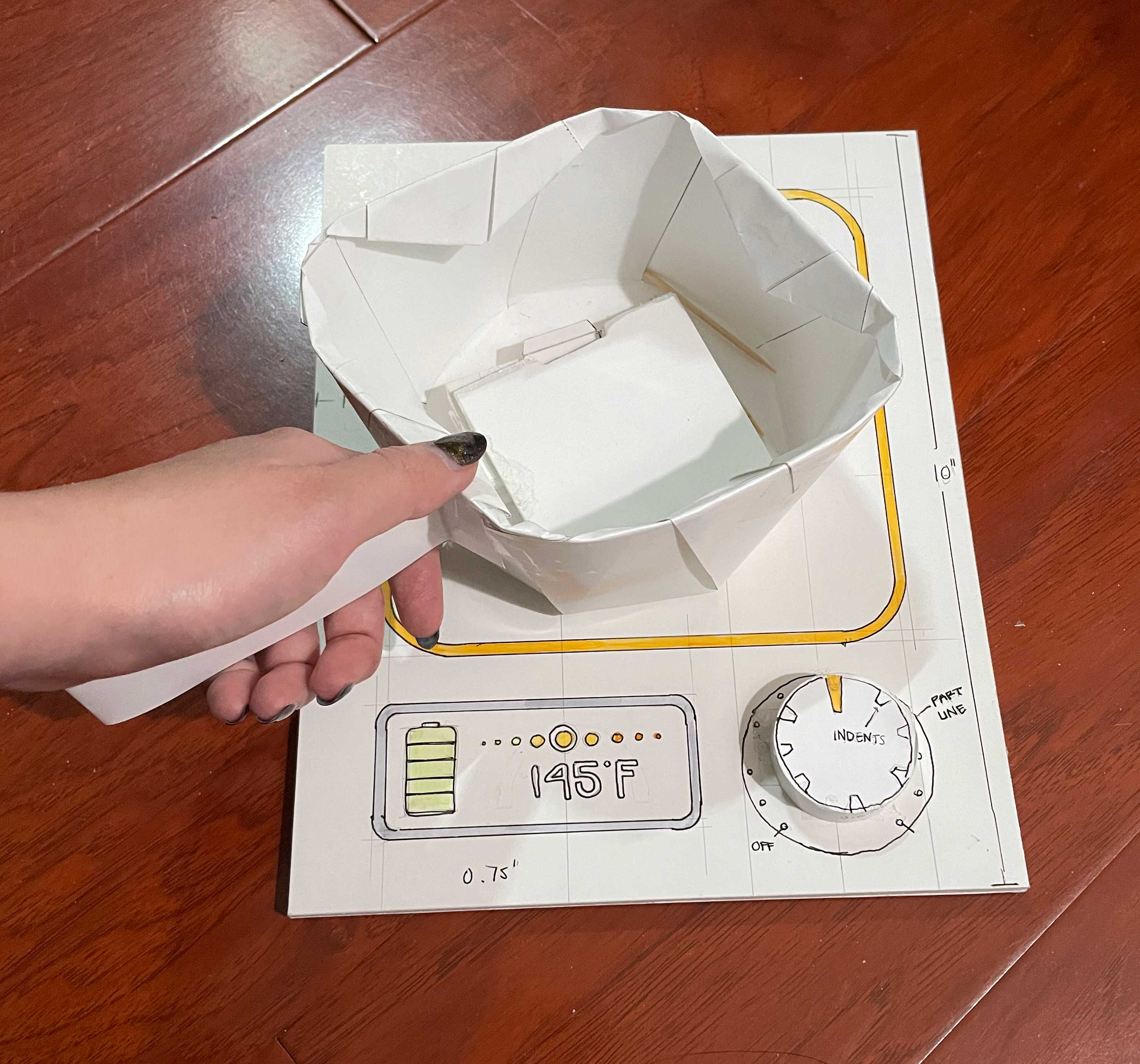
4. Decided that the 6”x6” cooking area worked for most camping pot sizes and is small enough to be lightweight and compact for backpacking.
1. Mini scale out of foam board, testing how legs articulate.
The stove concept is designed to not rely on fuel, is sustainable via electricity, and users can control the cooking temperature without worrying about the fire burning out. The interface is minimal and intuitive, so that users have the most important information in front of them to interact with and to minimize the learning curb. The cooking surface is designed with a raised edge to prevent sauces from spilling over and foldable legs to allow users to cook at a slightly higher level from the ground for comfort.
The Paca backpack is a day pack designed for comfort and style with organized compartments to carry essential gear for every adventurer's trip.
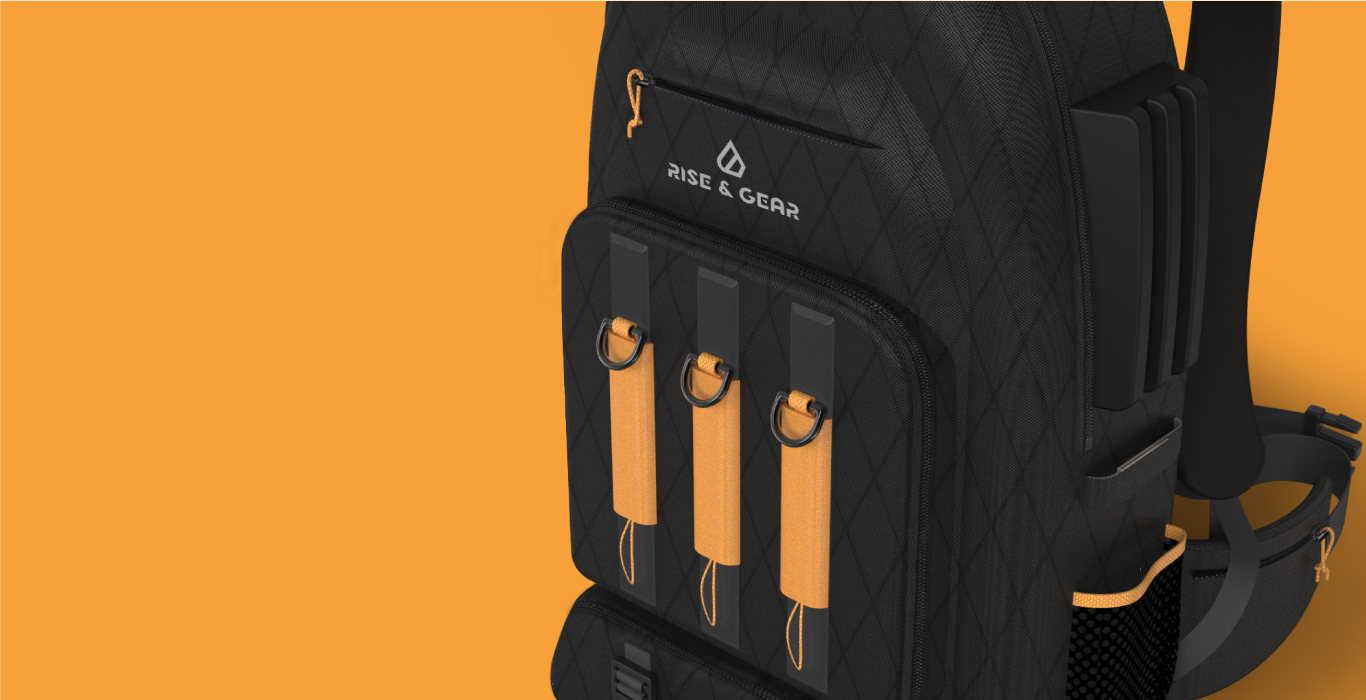
After conducting user interviews and field studies, I noticed fishing hobbyists tend to carry several rods, coolers, or other gear in their hands while walking down to their spot to camp and fish. Campers and fishing hobbyists expressed the need for attachments on their backpack to hold more of their belongings so that they can transport their gear with ease.
The goal is to design a backpack to minimize the amount of things to hold in a user's hands and carry with ease.
To figure out what campers and fishing hobbyists typically carry onto their adventure, I found some common items they bring: flashlight, a few rods, baits, a cooler for catches, snacks, a portable stove and pot, and camping chairs to name a few.
Based on research, I tried to design a backpack for users to carry their essentials while walking back and forth to each fishing spot. I explored different backpack forms and tried to figure out how the straps and compartments will work. The idea I went for focuses on holding multiple fishing rods, have several compartments for organization, and exterior attachments to carry additional belongings. I wanted this to look universal, not too aggressive and not too feminine, and be functional with the padded back support and attachments.
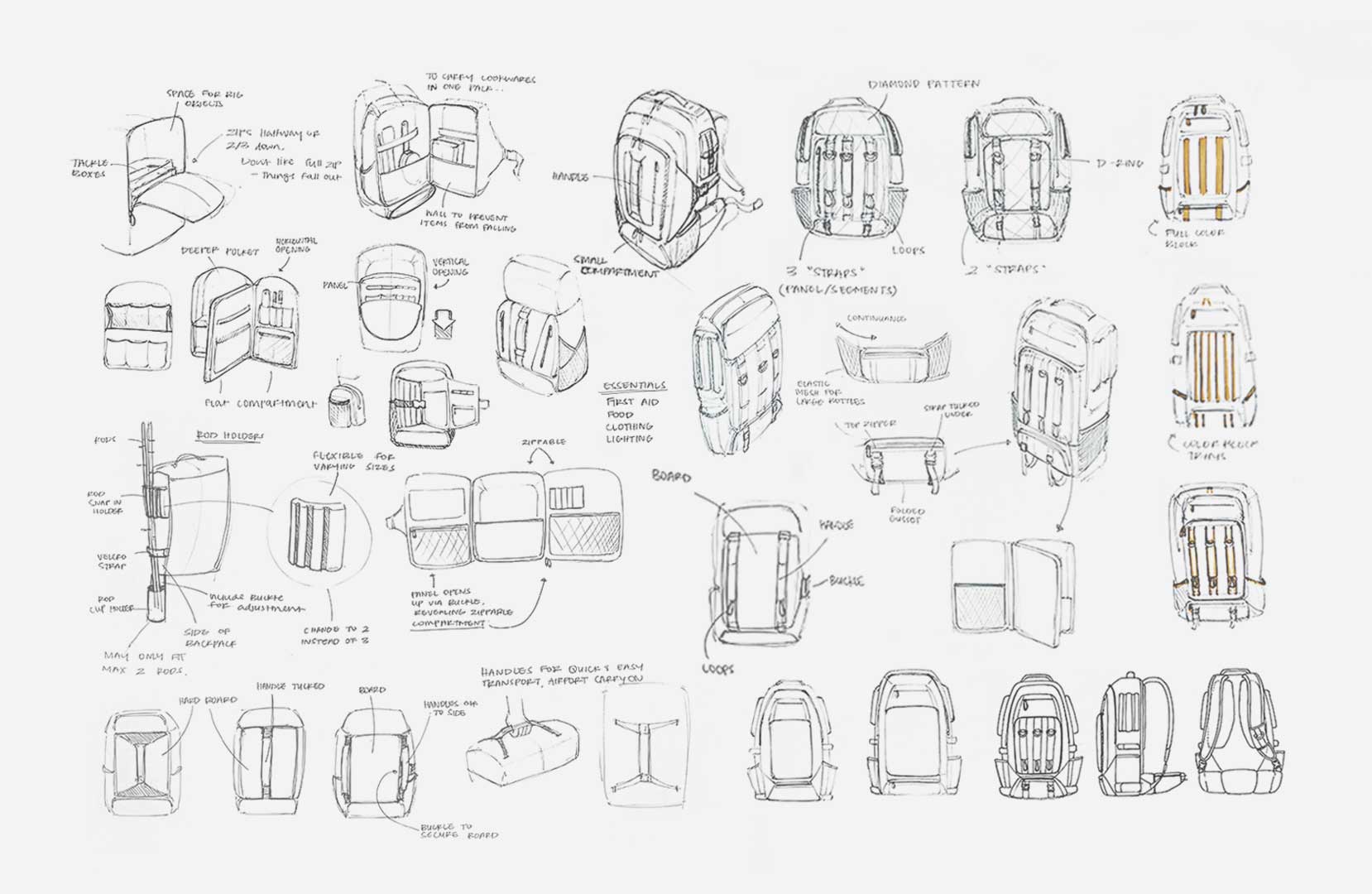
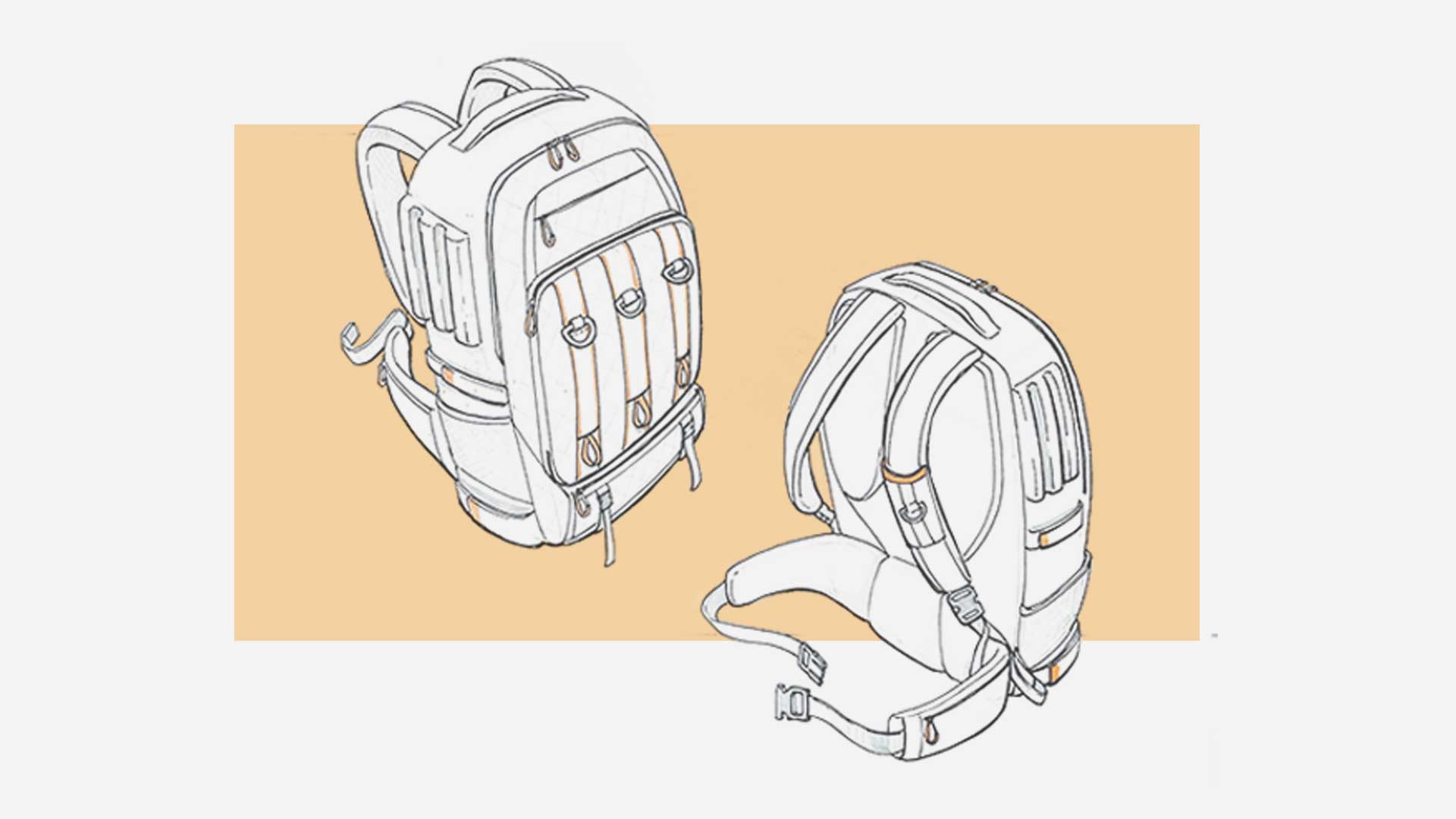
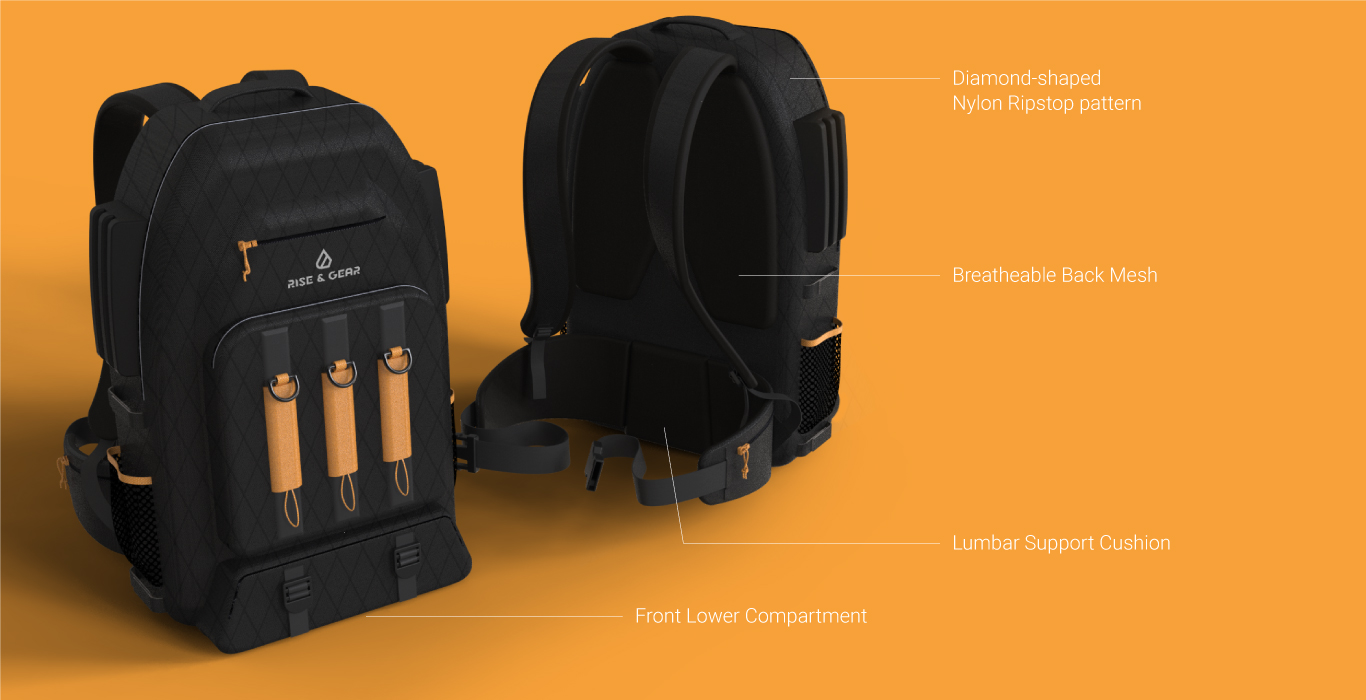
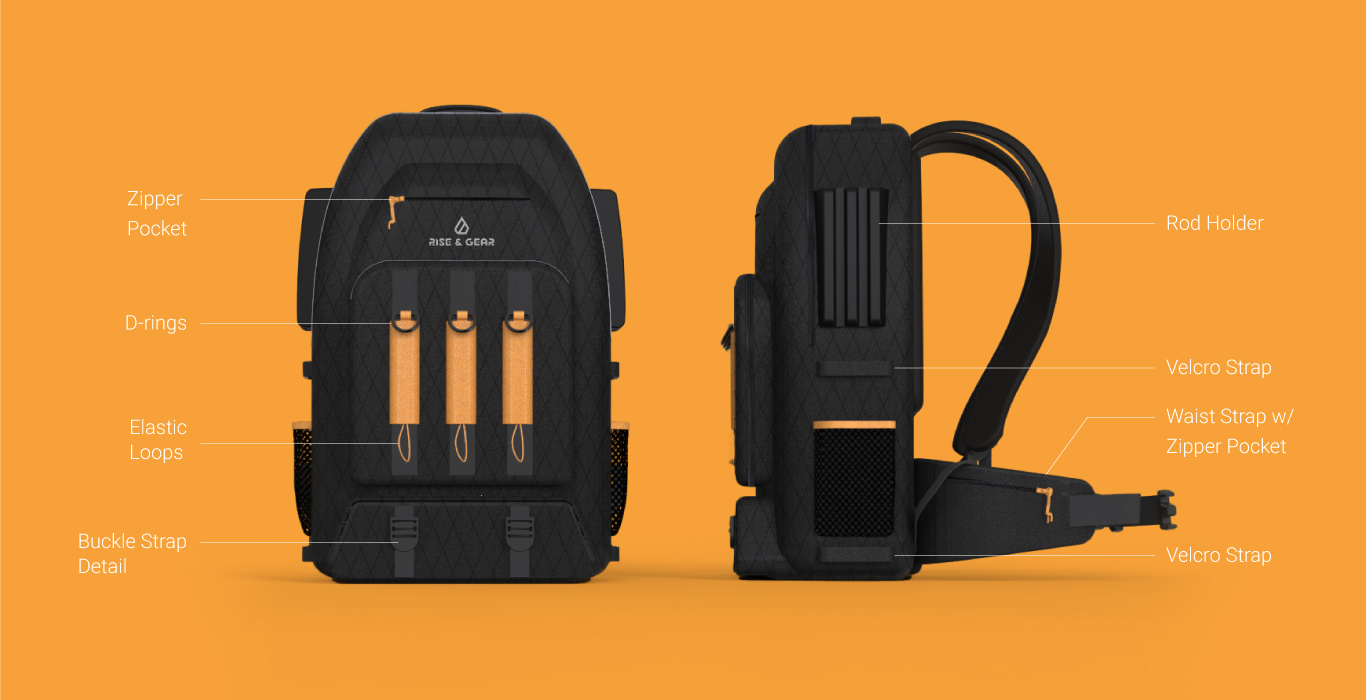
The backpack is designed for comfort, style, and function. It features multiple compartments, attachments, and a fishing rod holder on the side for users to carry their rods as they hike to the shore. The rod holder is made of rubber that safely hold fishing rods into place along with velcro straps for security. The backpack has a large compartment and 3 other compartments up front. The D-rings are meant to hook additional items such as a pot if needed and the elastic loops help hold objects like a trekking pole together.
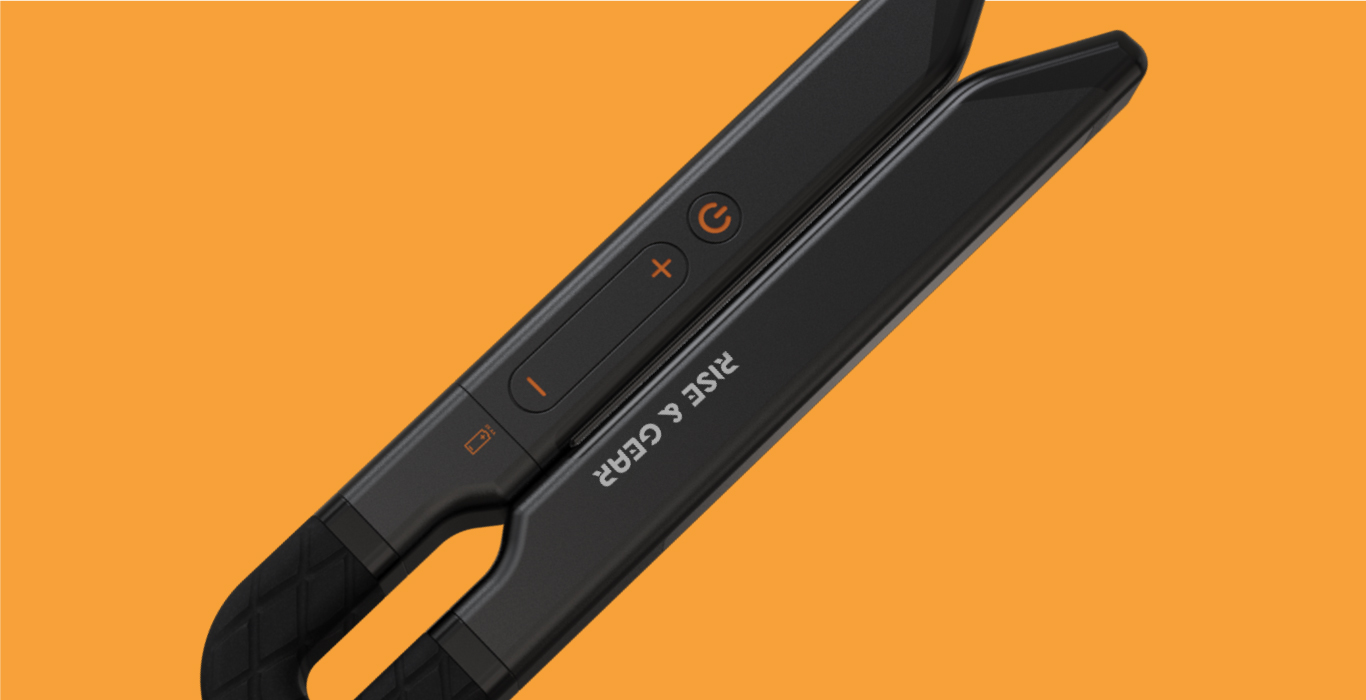
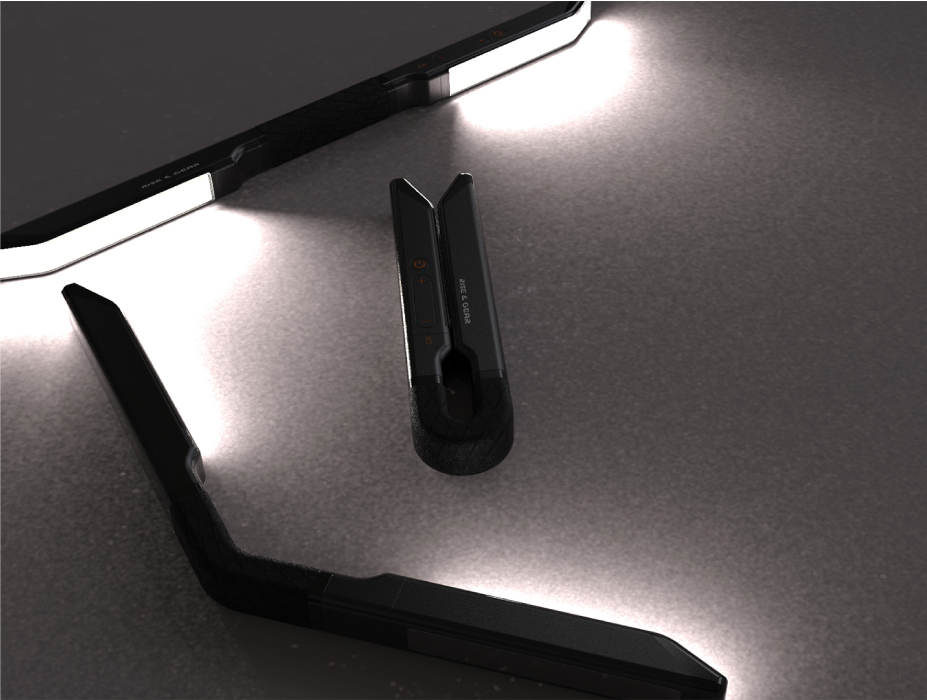
The Kan flashlight is a compact, slim and versatile lighting device used for any situation from lighting your workspace to lighting the pier while you fish.
When it's dark out, campers and fishing hobbyist tend to turn on their phone's light, flashlight, headlamp, or a small lantern to light up the area while they continue to perform their tasks outdoors. Sometimes, because they don't have enough hands, they would hold the light between their neck and shoulders or place the light source on the ground to see.
My goal is to design a flashlight that can act as an area light for users to continue working on other tasks when it gets dark outside.
From conducting interviews and surveys, I found that the most common light source my primary user group carry are the compact tactical flashlights for its lightweight, compact, and long-lasting features. Those who uses a headlamp carries one because it doesn't get in the way of other activities.
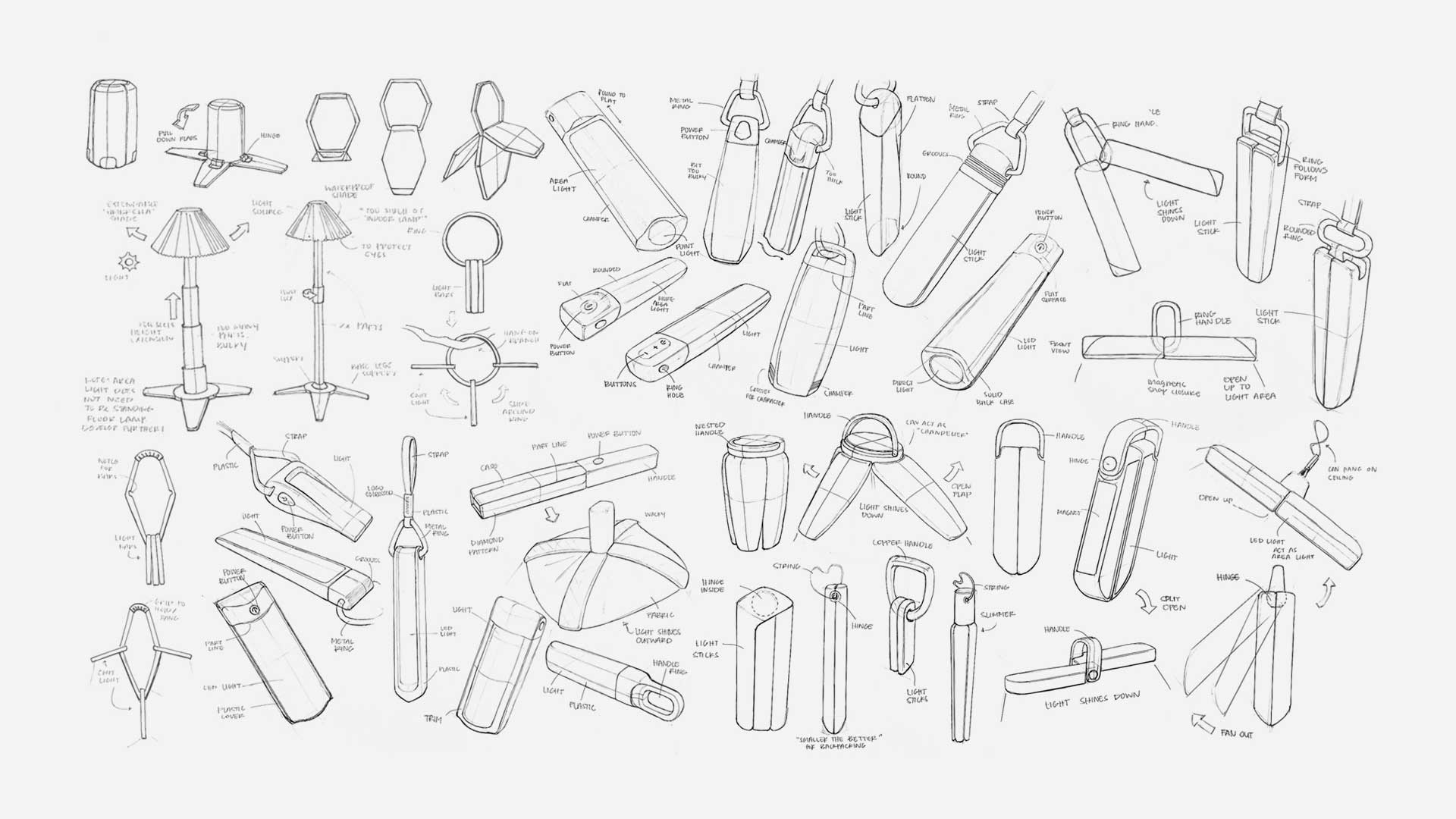
Throughout my ideations, I focused on how the user will hold this, how it stores, and how it functions as an area light while the user perform their tasks. I explored minimal forms with the idea of making the flashlight flexible to create different light distances or hang it over things.
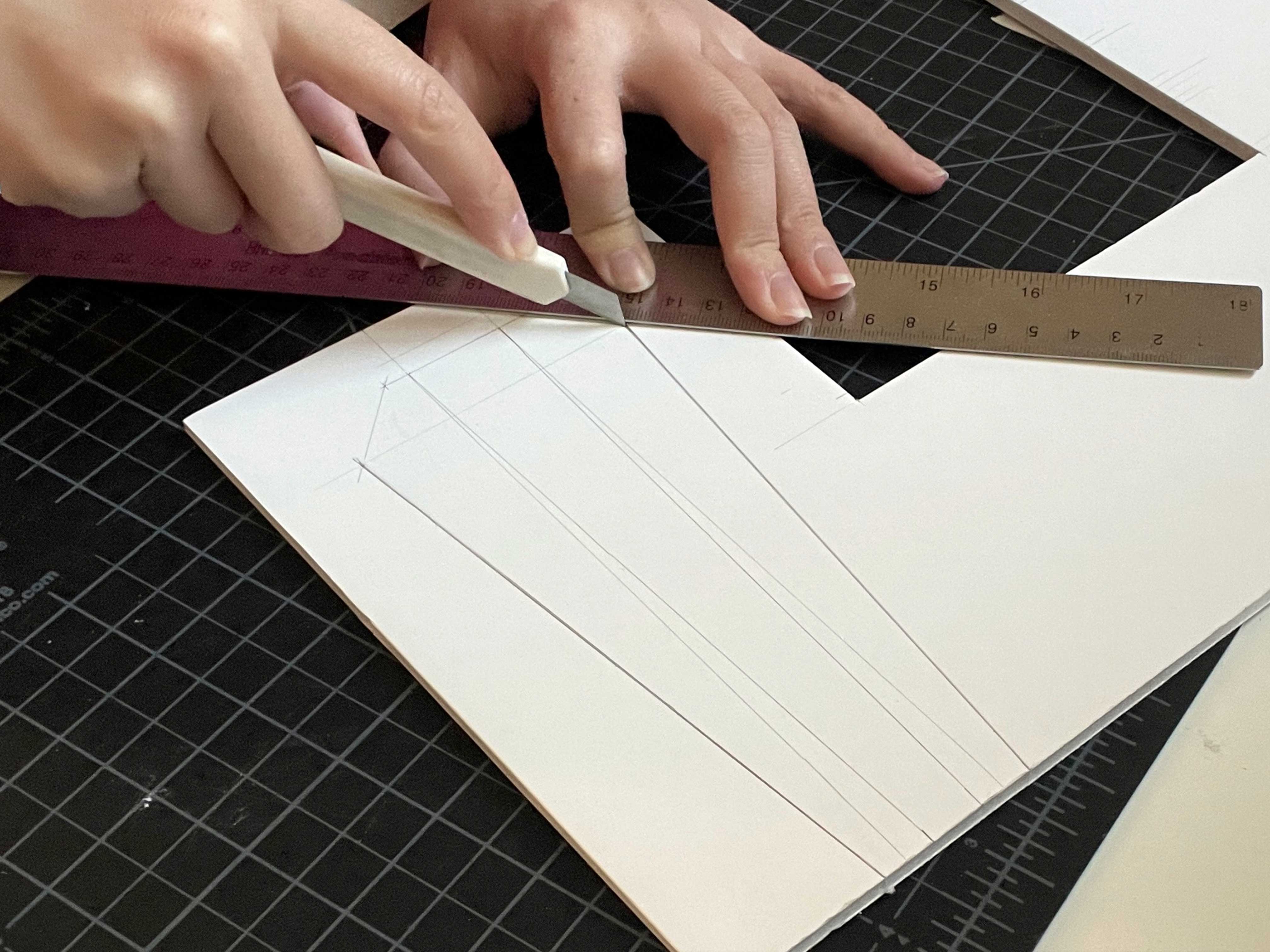
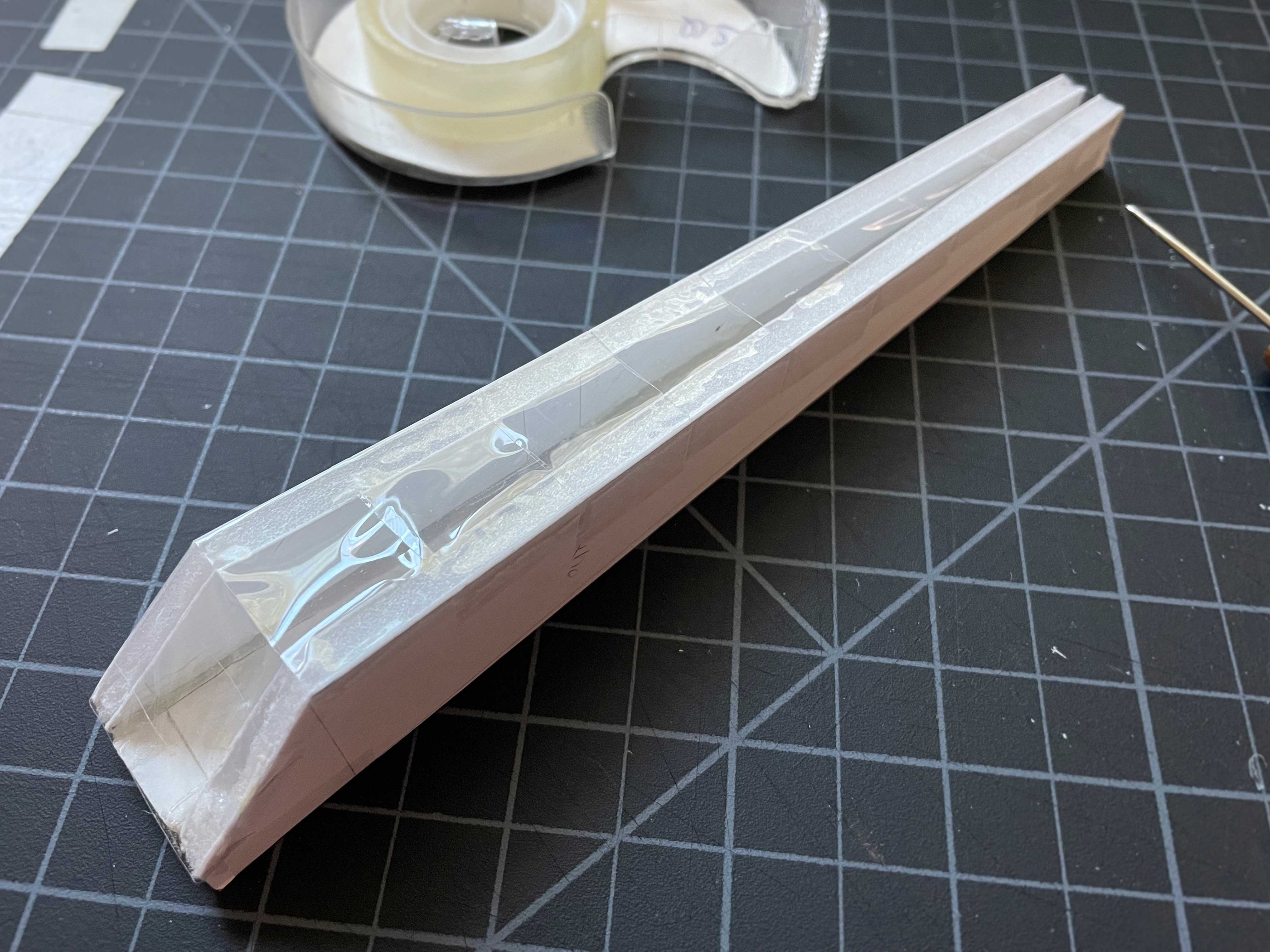
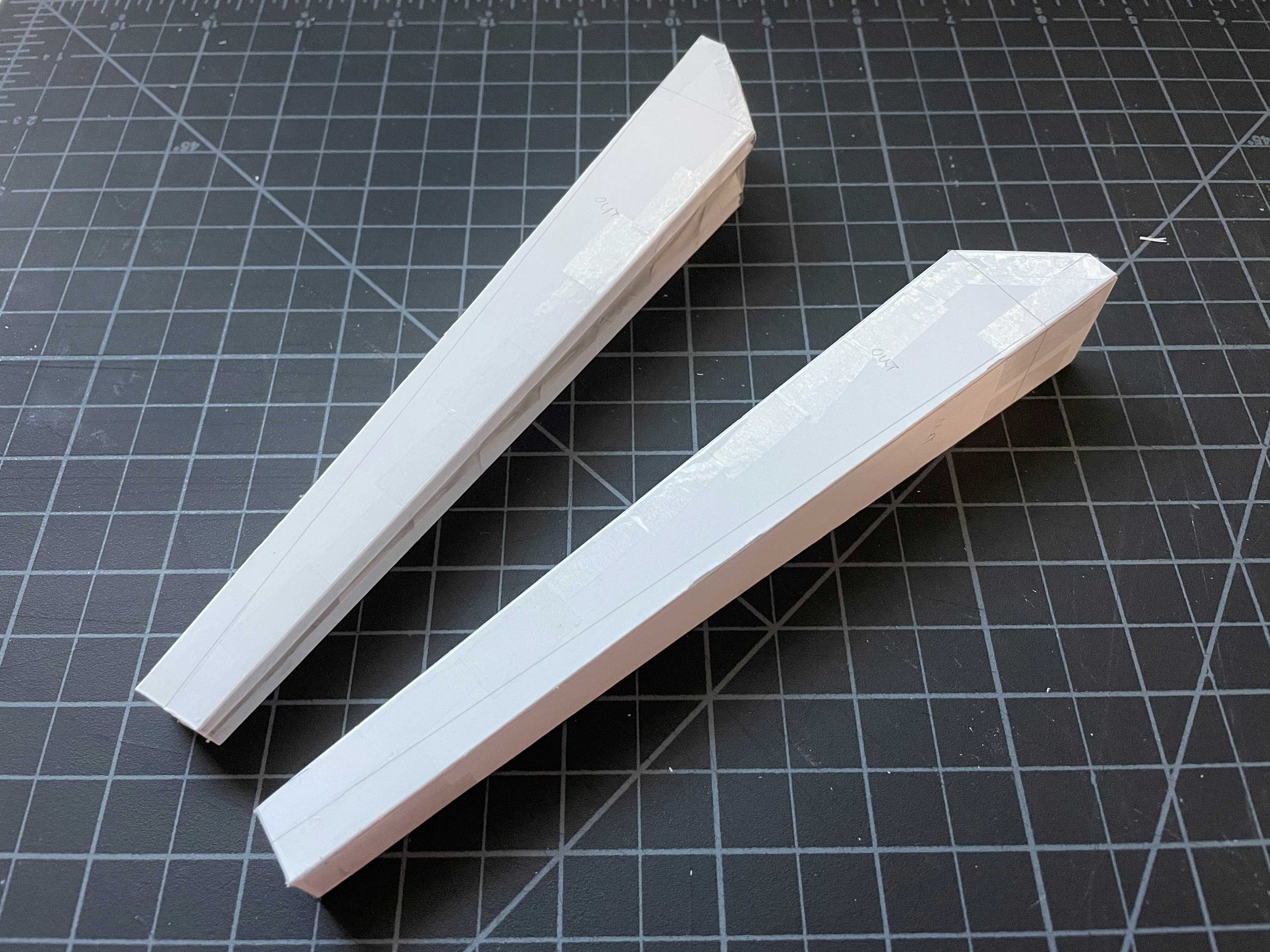
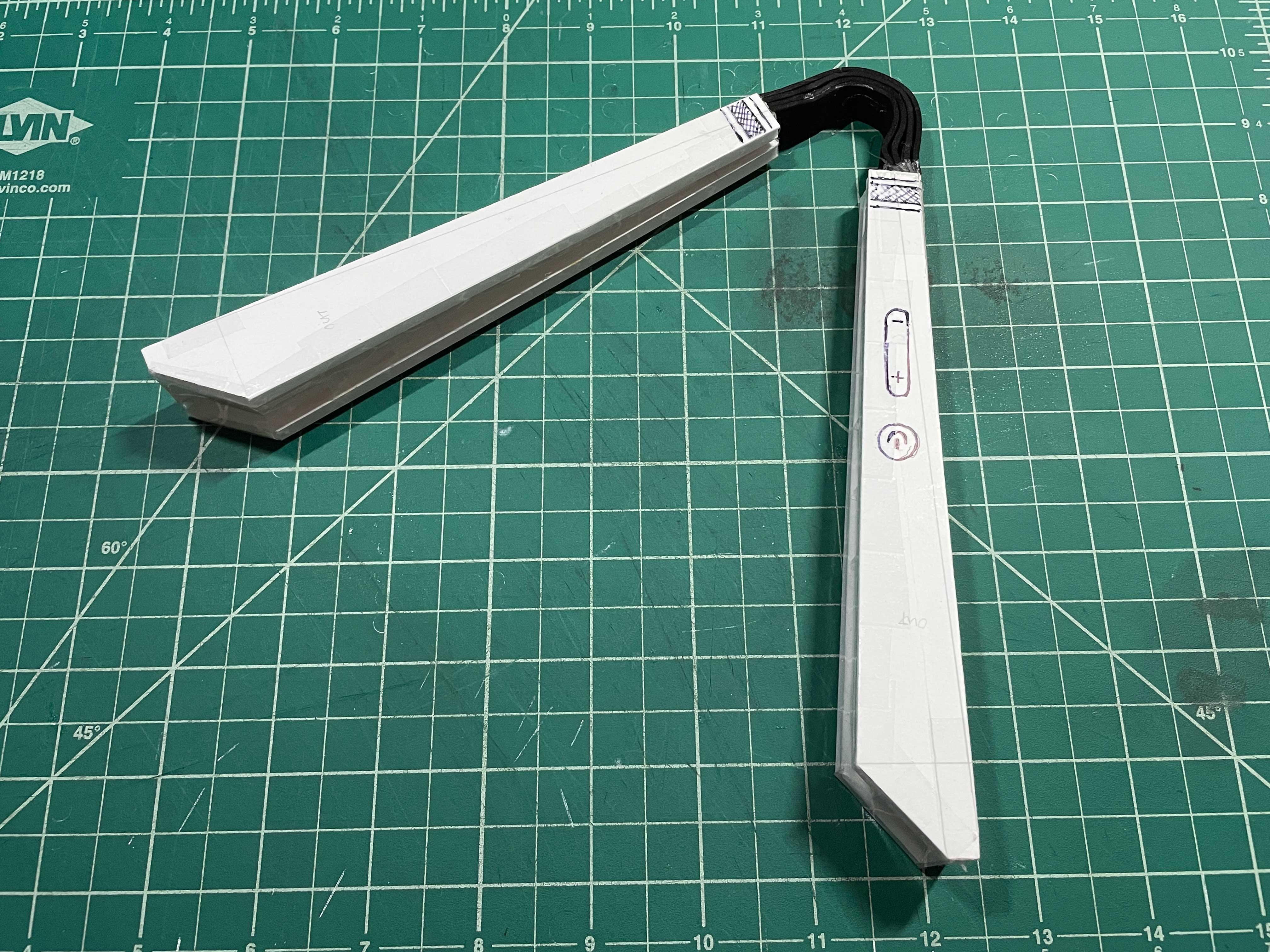
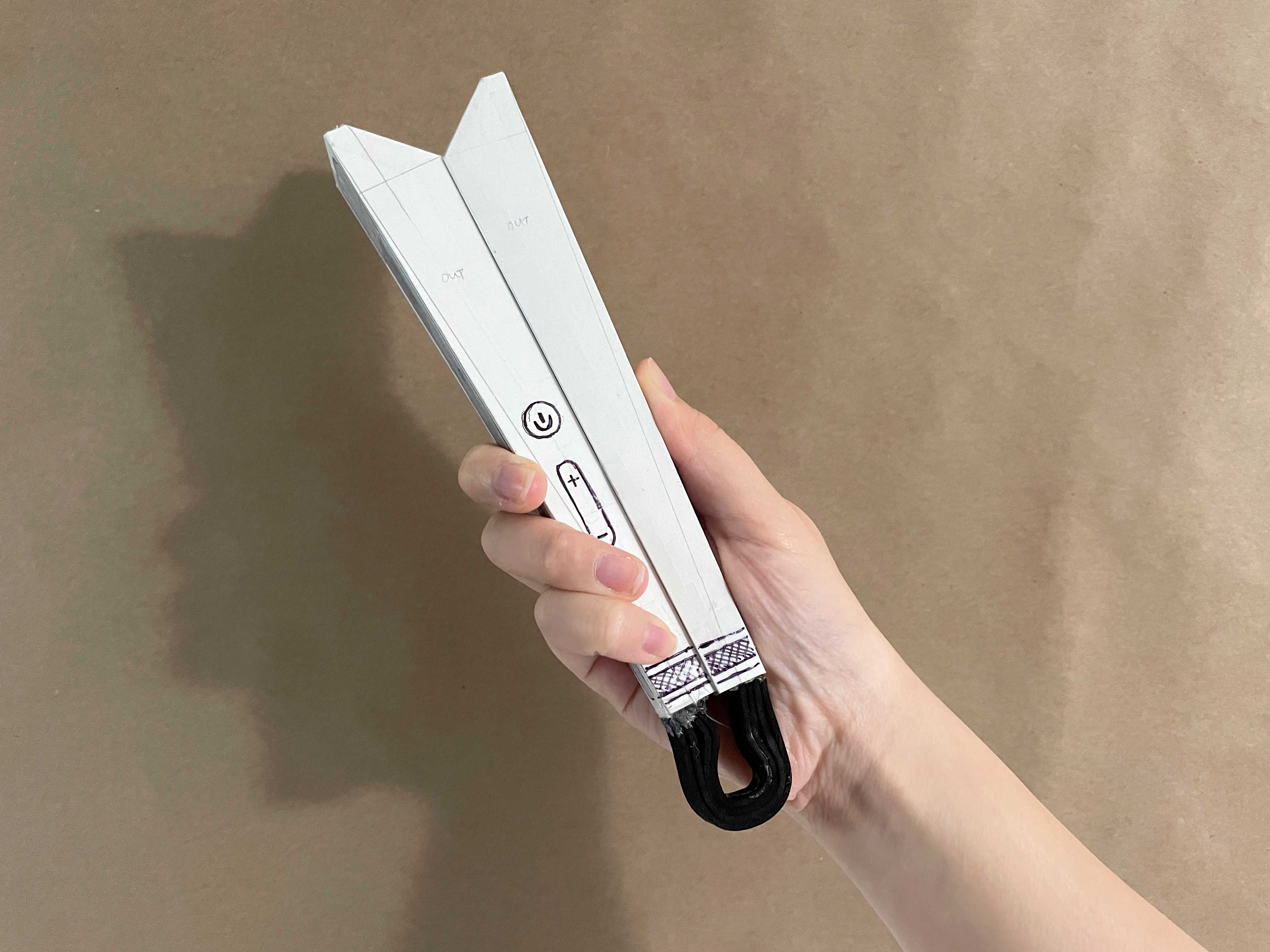
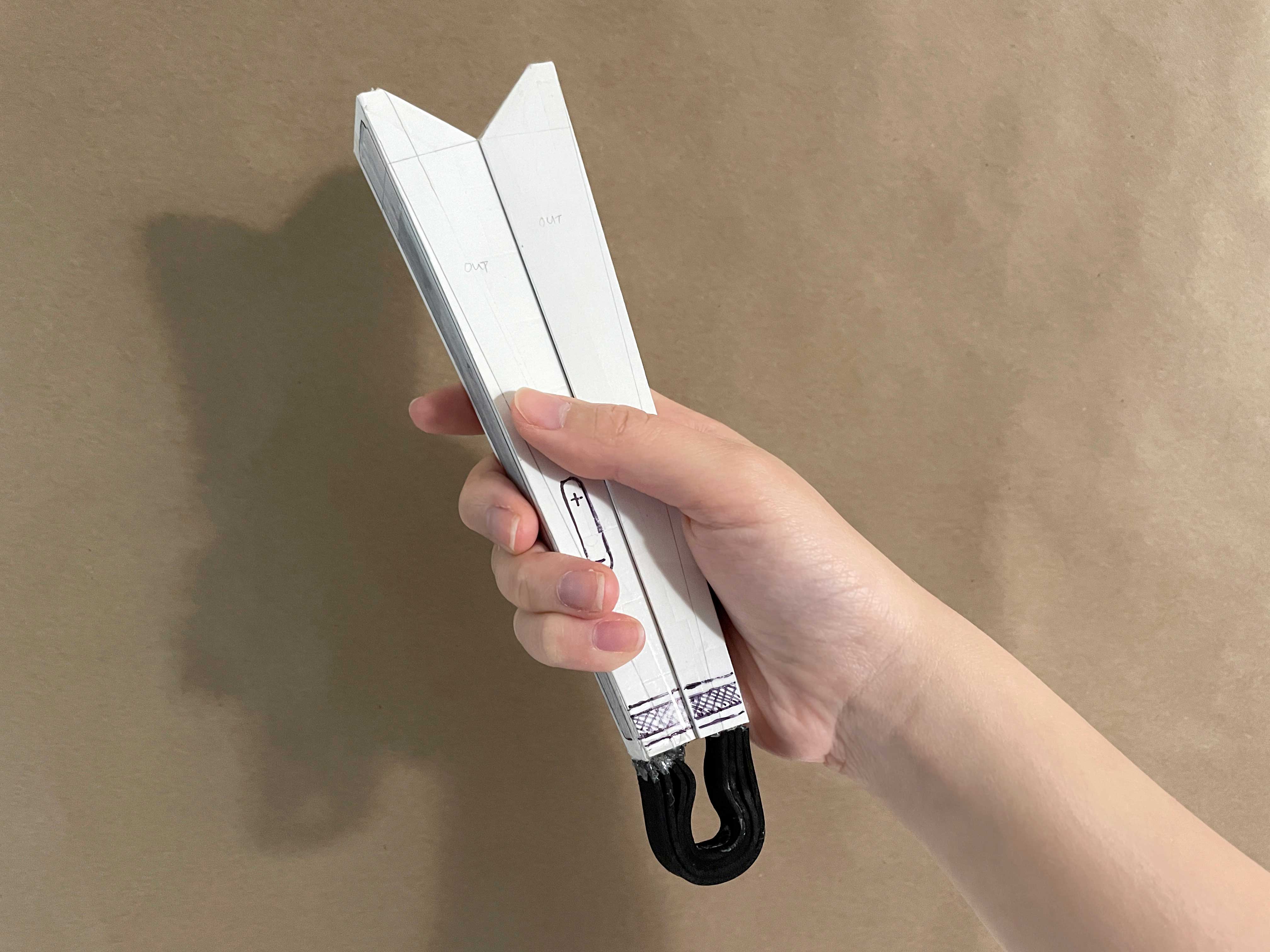
3. Creating two separate parts.
4. Using craft form as the "flexible gooseneck."
2. Assembling and using tape to act as acrylic glass.
5. Testing ergonomics. Edges need to soften.
6. Testing thumb to button distance.
1. Measuring and cutting out parts out of foam board.
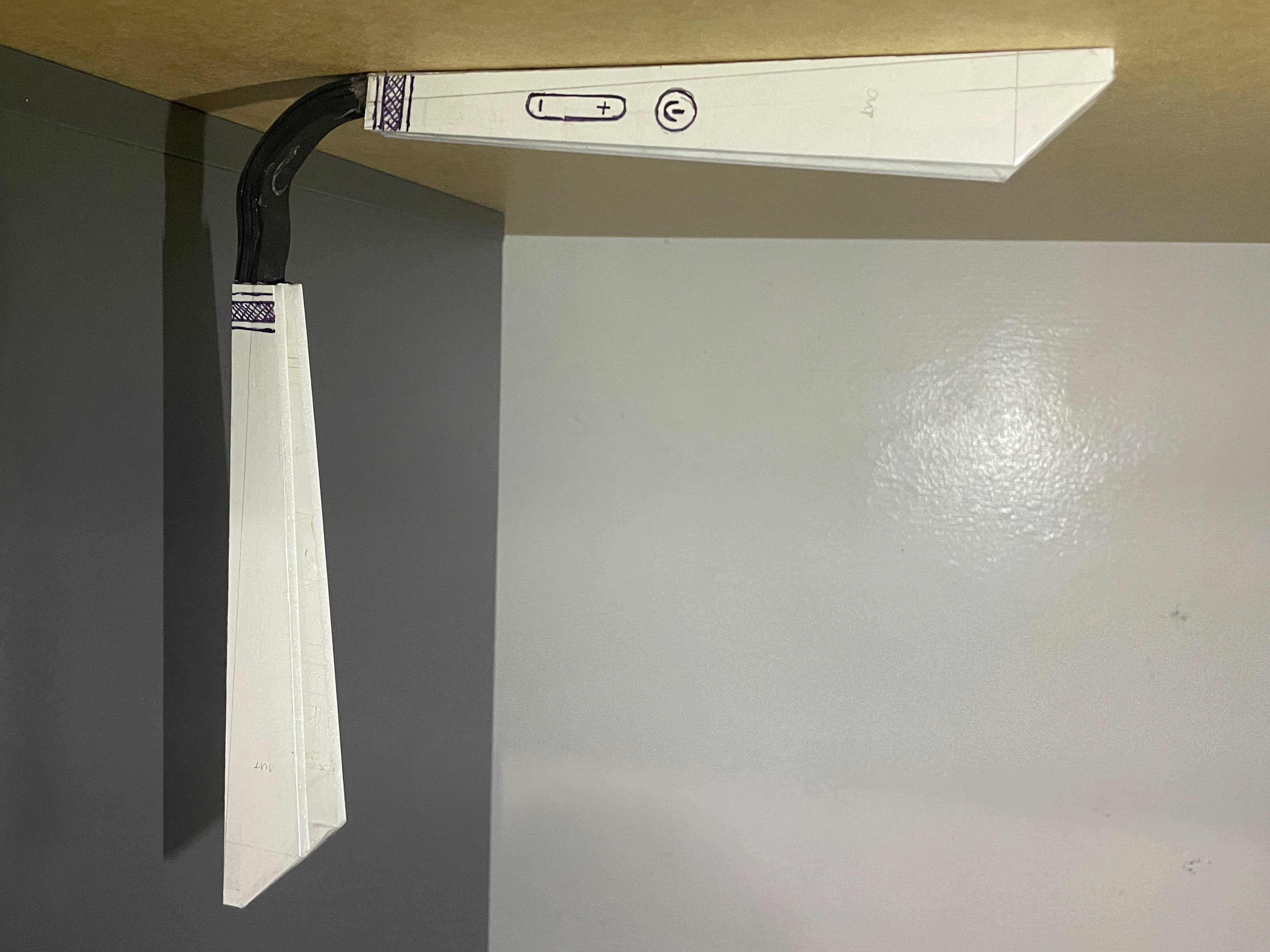
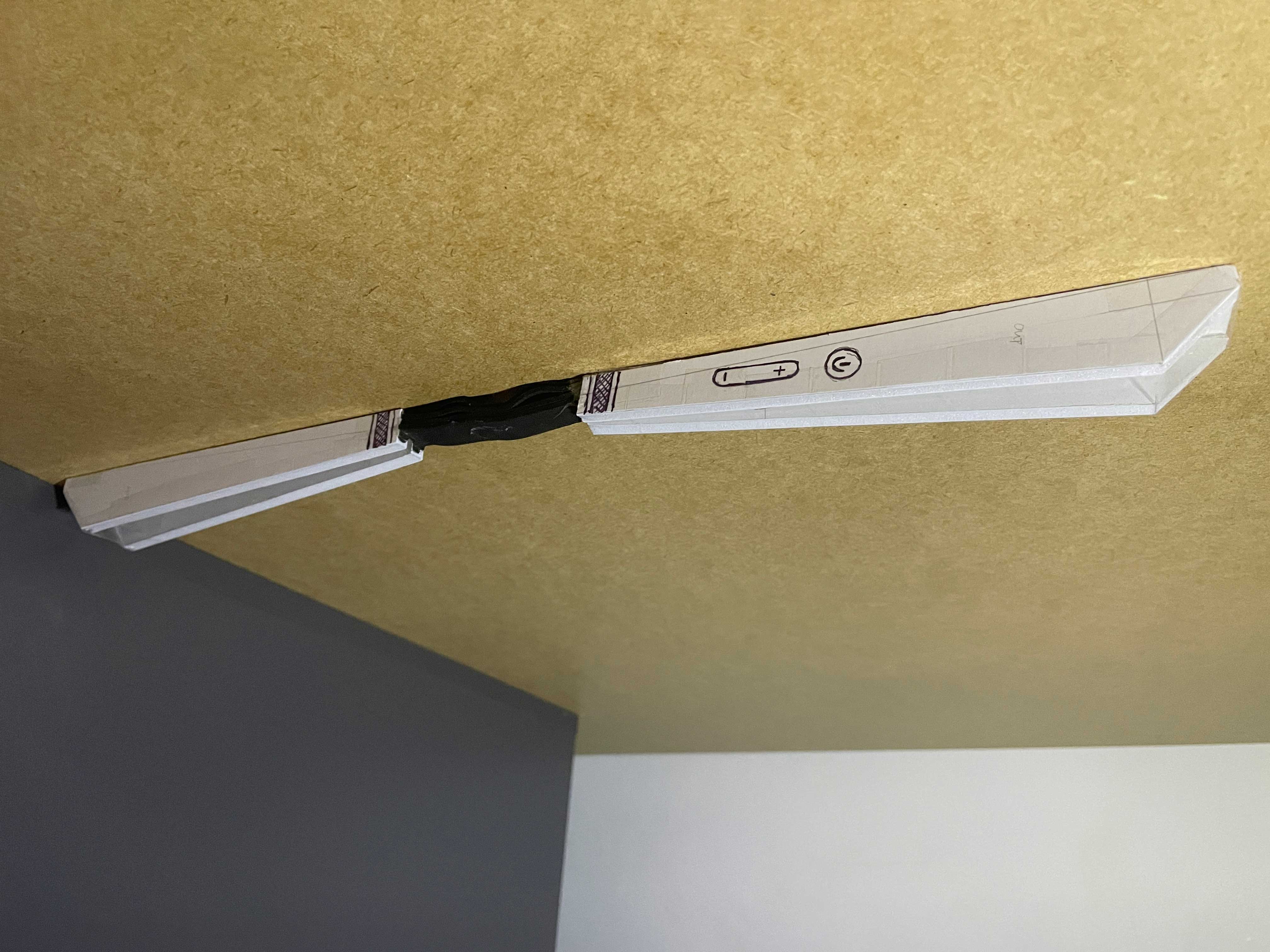
7. Testing how "magnetic" attachment will look.
8. Testing how full extension sticks to “magnetic” surface.
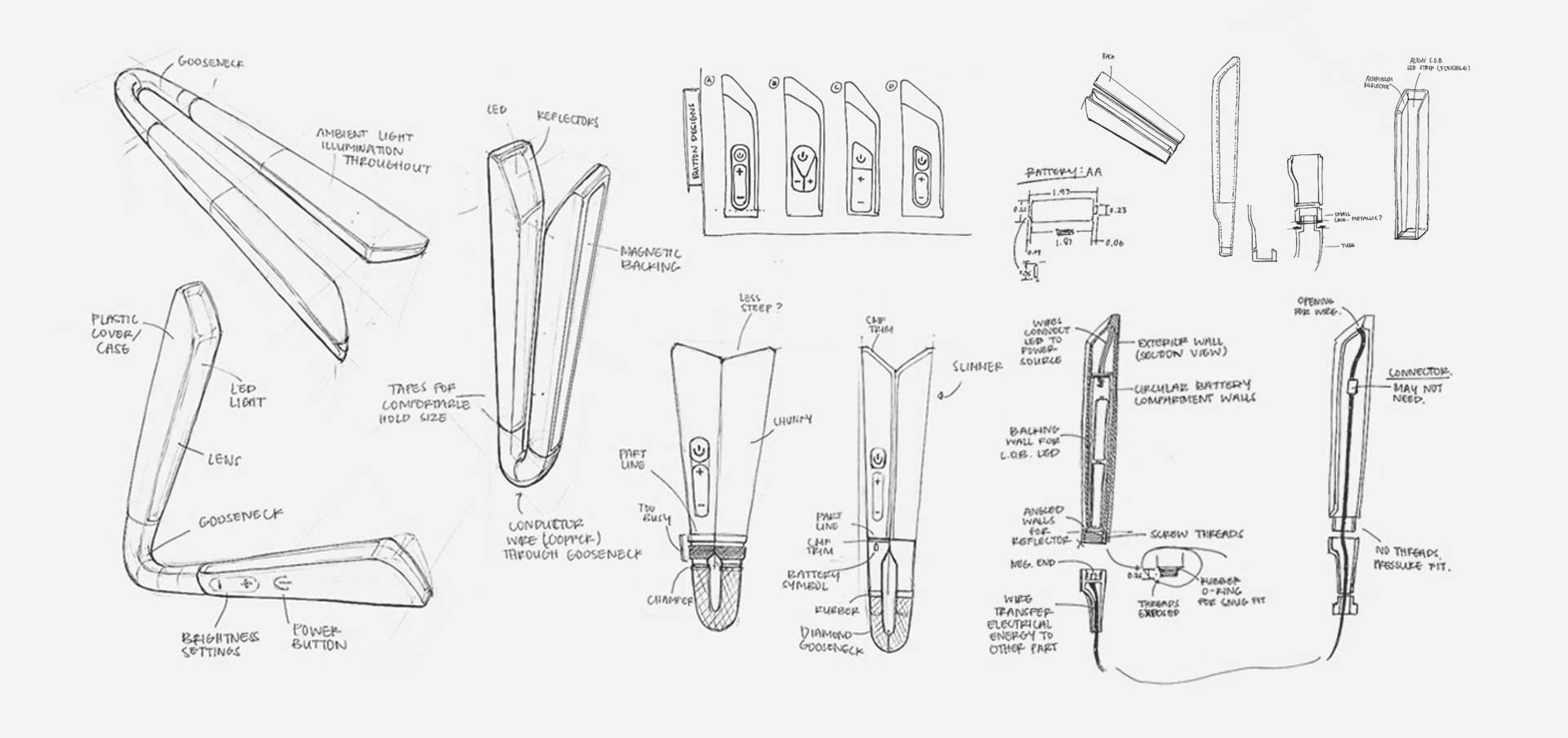
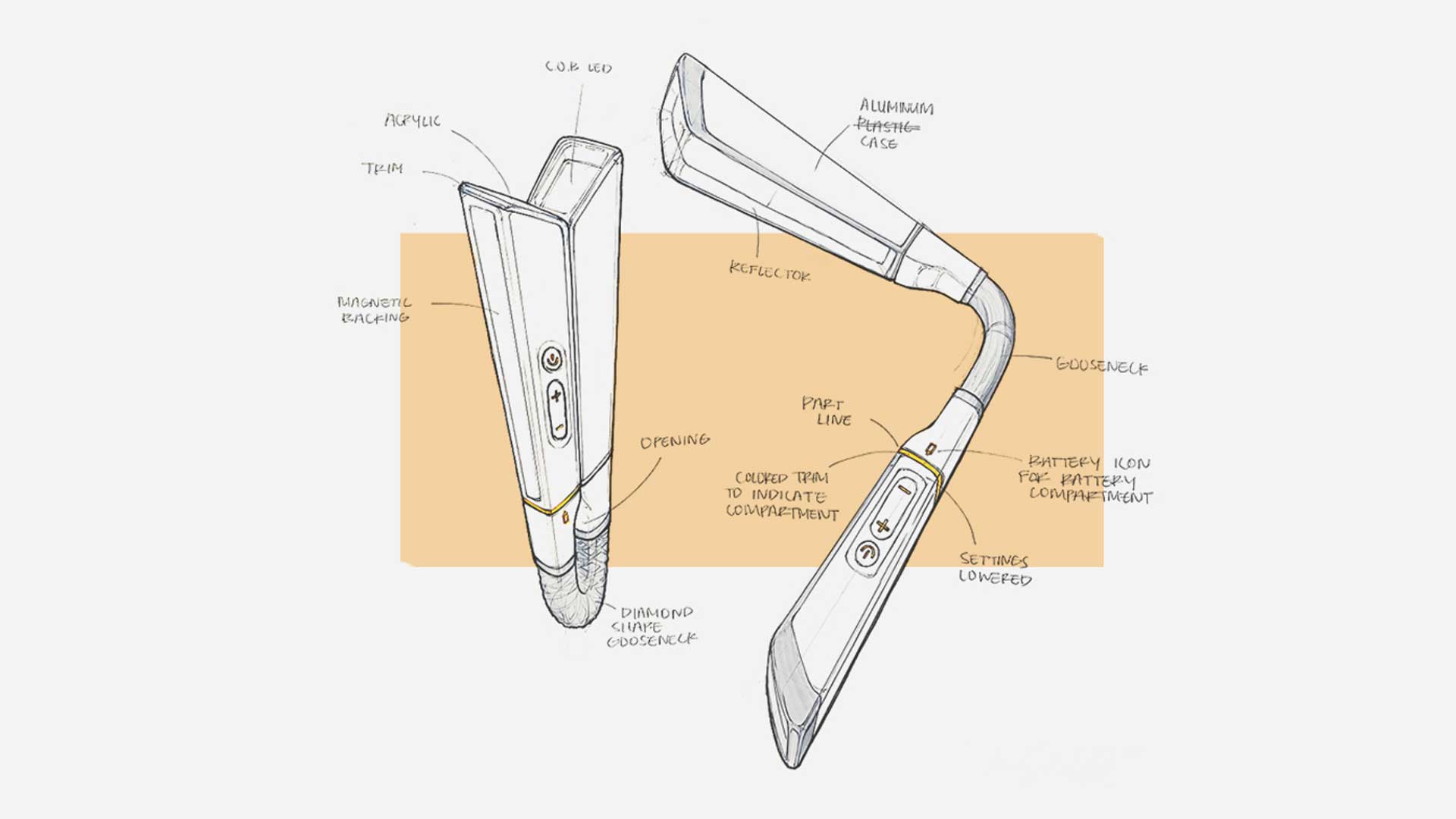
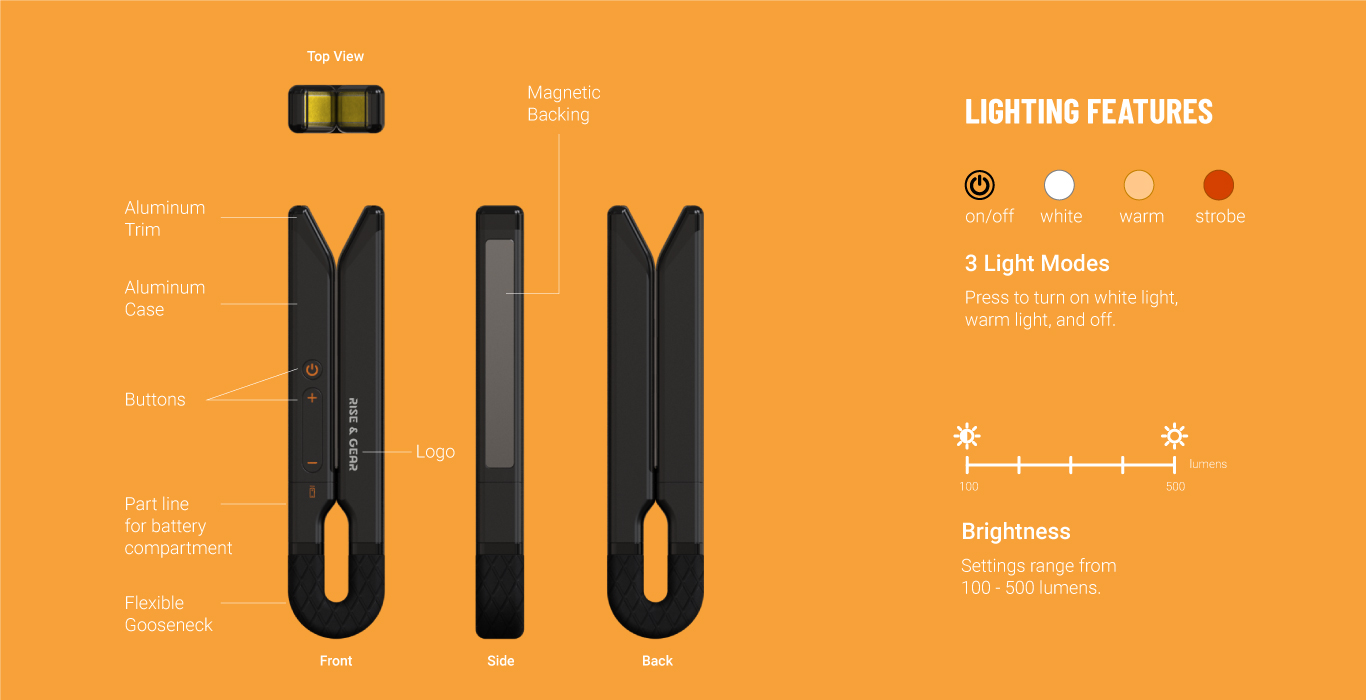
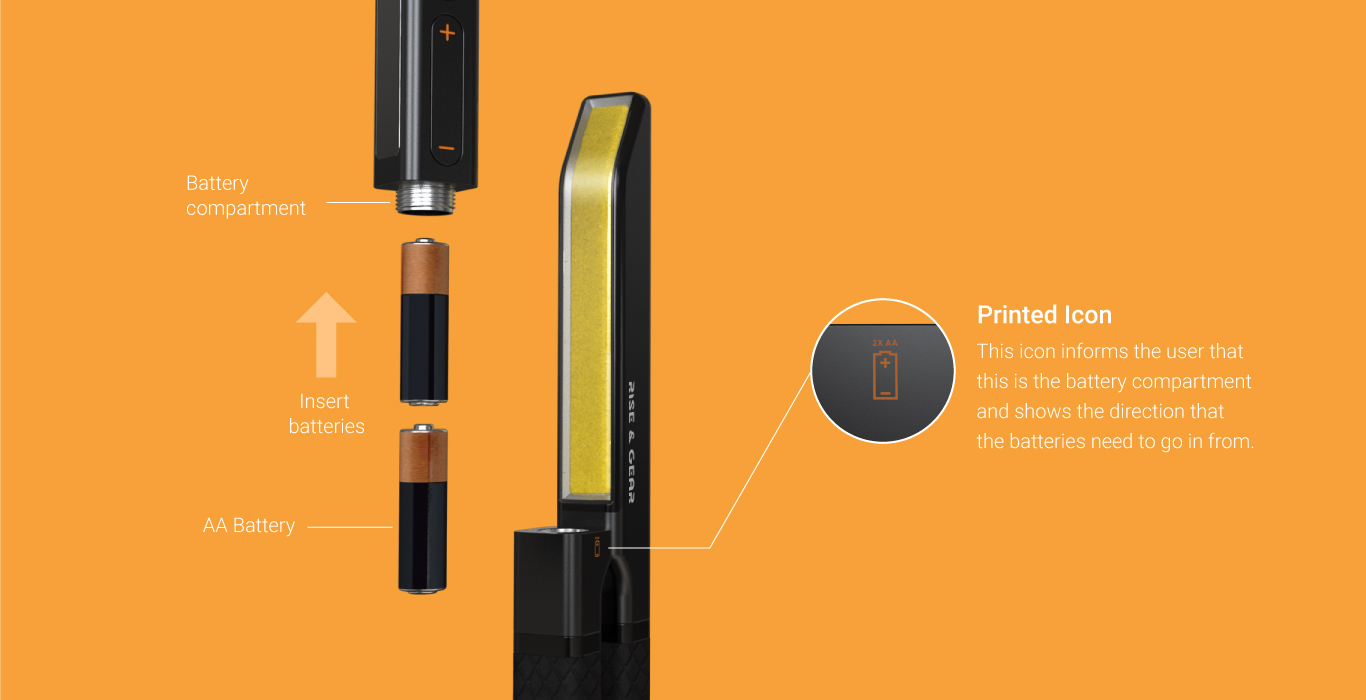
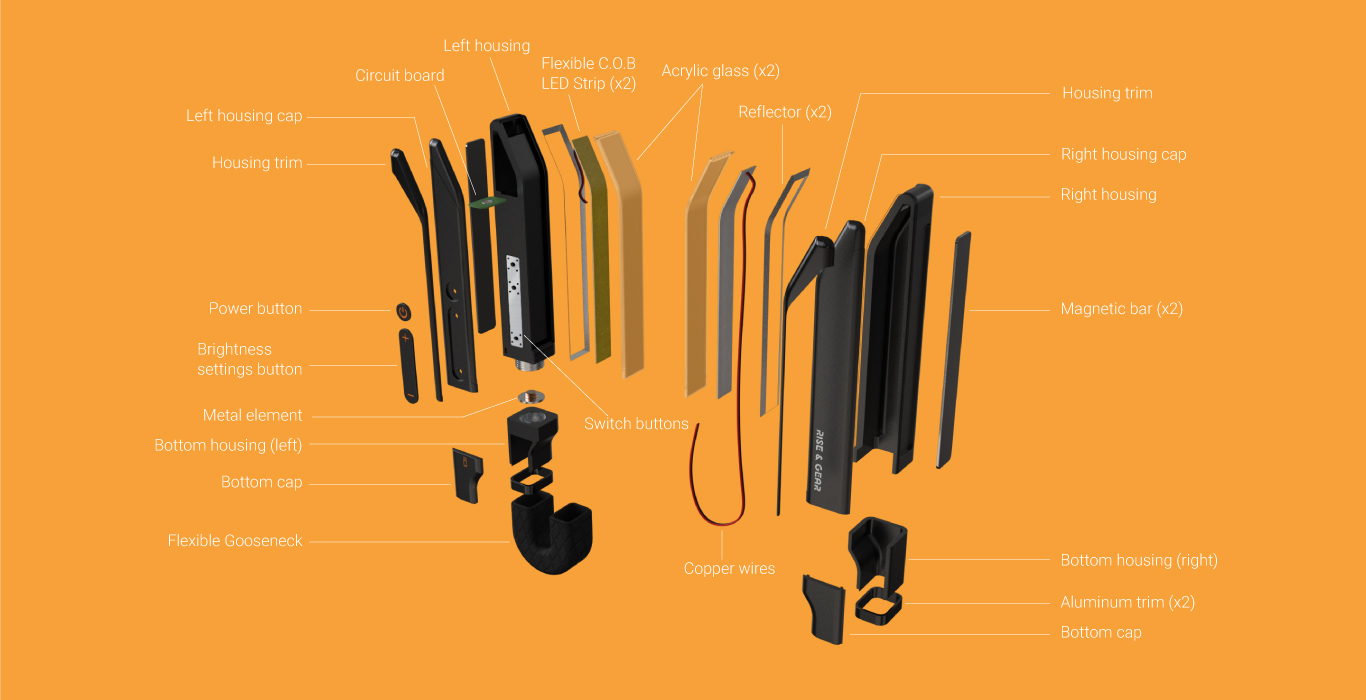
The concept for the Kan flashlight is inspired by diamond shape cues and urban aesthetics. It can be used as a handheld flashlight or bend the flexible gooseneck into any direction to create an area light. Users can use it to hang it over rails or stick its magnetic backing to a metal surface. The flashlight is constructed to transfer battery energy from the main compartment through the flexible gooseneck and into the other compartment.
The light is emitted from a flexible C.O.B. LED strip that makes it possible to comfortably sit behind the acrylic glass. The LED strip consume less power yet outputs a higher quality beam of light, ensuring that users receive a long-lasting visibility in the dark.
Throughout this project, I learned the importance of being consistent with the brand's design language when designing products for a brand. From peer critiques, I learned to keep pushing a design concept - which I did with the flashlight and updated its design.
The next steps I would like to do for this project is to create physical prototypes for these products. I also need to find numbers and measurements for aspects such as the weight, temperature, etc.