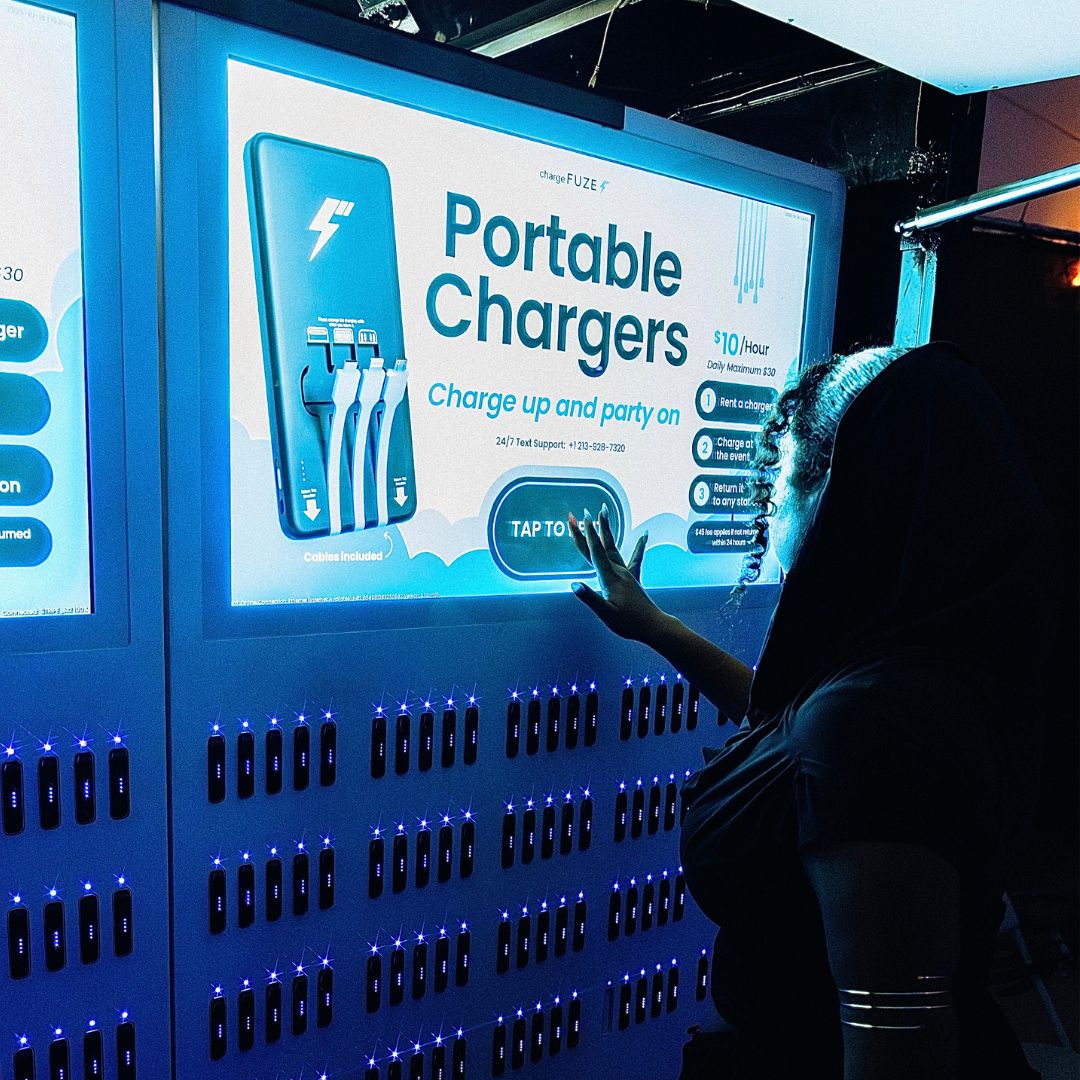
chargeFUZE rents portable chargers from touchscreen stations in bars, venues, and hotels. Renting one required scanning a QR code with your phone - the same phone that was dying.
I designed the on-station flow that let people rent without it.

Layout, type, and touch targets for a large public display

Tap-to-pay and QR handoff paths

Configurable rental paths per venue type

Declined payments, empty stations, abandoned sessions

What the station shows while payment happens on the user's phone
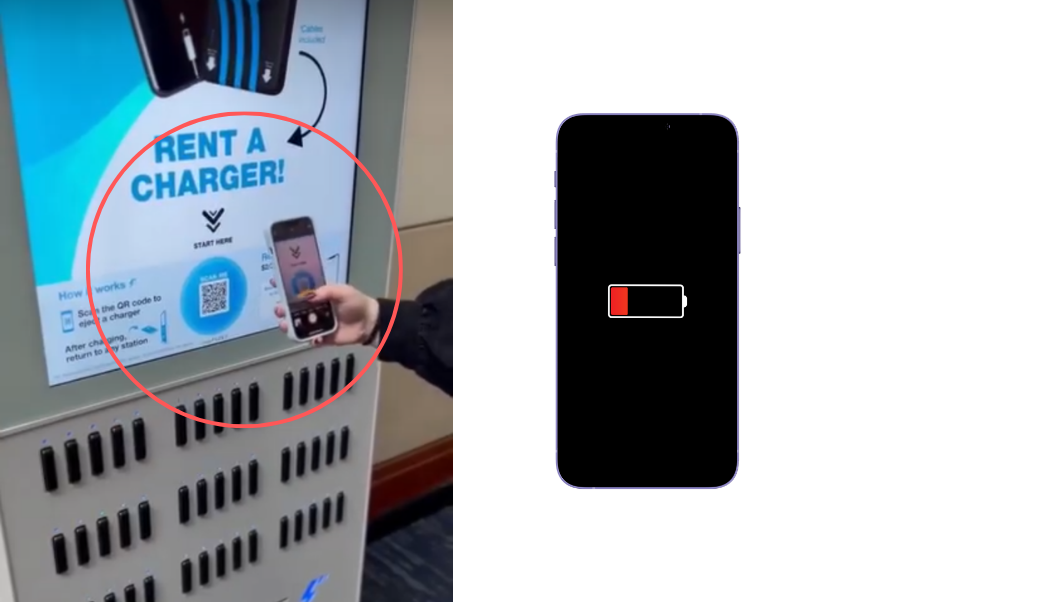
The only way to rent was scanning a QR code, which required a working phone. Most people at a charging station either have low battery or a dead phone.
The goal: make the station itself the whole rental experience.
The station is a large display in crowded venues.
I designed for high contrast, large touch targets, and short reading distance.
Interactions sit low on the screen for comfortable reach whether you're standing or sitting on a wheelchair, and shielding phone number entry from people standing behind the user.
.png)
Not every venue needed the same rental path. I designed the default flow to allow users the option to pay at the station or via the app. Later, I designed screens for additional variants for venues that needed a rental path that best fit their environment.

.png)
Users can pay directly at the station with a card or digital wallet. The screen guides them through tapping, inserting, and confirming.
Once payment goes through and the charger ejects, a success screen closes out the rental.
.png)
.png)
Designing for a public, unassisted environment made clear feedback states essential. I designed for declined payments, empty stations, and users who start a rental and walk away.
After 2 minutes idle, a session check appears with a countdown before returning the screen to ad content.
.png)
Before this new flow, people whose phone died couldn't rent a charger. This update made every station usable for every user, regardless of battery %.
This project pushed me past the screen and into the environment it lives in. The user is standing in a crowded, public space, already frustrated, holding a phone that won't help them. That shaped every decision: reach, contrast, timing, and what happens when something goes wrong.